



-
Regular price Rs.1,001Sale price Rs.1,001 Regular priceUnit price per
Ships in 5-6 days
Get it by Tue, Aug 04 – Wed, Aug 05
-
Regular price Rs.518Sale price Rs.518 Regular priceUnit price per
Ships in 5-6 days
Get it by Tue, Aug 04 – Wed, Aug 05
-
Regular price Rs.5,150Sale price Rs.5,150 Regular priceUnit price per
Ships in 5-6 days
Get it by Tue, Aug 04 – Wed, Aug 05
-
Regular price Rs.14,167Sale price Rs.14,167 Regular priceUnit price per
Rs.14,167Ships in 2-3 days
Get it by Sun, Aug 02 – Tue, Aug 04
-
Regular price Rs.5,150Sale price Rs.5,150 Regular priceUnit price per
Ships in 5-6 days
Get it by Tue, Aug 04 – Wed, Aug 05
-
Regular price Rs.5,150Sale price Rs.5,150 Regular priceUnit price per
Ships in 5-6 days
Get it by Tue, Aug 04 – Wed, Aug 05
-
Regular price Rs.748Sale price Rs.748 Regular priceUnit price per
Ships in 5-6 days
Get it by Tue, Aug 04 – Wed, Aug 05
-
Regular price Rs.2,950Sale price Rs.2,950 Regular priceUnit price per
Ships in 5-6 days
Get it by Tue, Aug 04 – Wed, Aug 05
-
Regular price Rs.2,961Sale price Rs.2,961 Regular priceUnit price per
Ships in 5-6 days
Get it by Tue, Aug 04 – Wed, Aug 05
-
Regular price Rs.2,185Sale price Rs.2,185 Regular priceUnit price per
Ships in 5-6 days
Get it by Tue, Aug 04 – Wed, Aug 05
-
Regular price Rs.22,858Sale price Rs.22,858 Regular priceUnit price per
Ships in 5-6 days
Get it by Tue, Aug 04 – Wed, Aug 05
-
Regular price Rs.11,270Sale price Rs.11,270 Regular priceUnit price per
Ships in 5-6 days
Get it by Tue, Aug 04 – Wed, Aug 05
-
Regular price Rs.1,553Sale price Rs.1,553 Regular priceUnit price per
Ships in 5-6 days
Get it by Tue, Aug 04 – Wed, Aug 05
-
Regular price Rs.10,178Sale price Rs.10,178 Regular priceUnit price per
Rs.10,215Ships in 5-6 days
Get it by Tue, Aug 04 – Wed, Aug 05
Sale -
Regular price Rs.4,743Sale price Rs.4,743 Regular priceUnit price per
Rs.4,743Ships in 5-6 days
Get it by Tue, Aug 04 – Wed, Aug 05
-
Regular price Rs.6,200Sale price Rs.6,200 Regular priceUnit price per
Ships in 2-3 days
Get it by Sun, Aug 02 – Tue, Aug 04
-
Regular price Rs.1,093Sale price Rs.1,093 Regular priceUnit price per
Ships in 5-6 days
Get it by Tue, Aug 04 – Wed, Aug 05
-
Regular price Rs.6,384Sale price Rs.6,384 Regular priceUnit price per
Ships in 5-6 days
Get it by Tue, Aug 04 – Wed, Aug 05
-
Regular price Rs.15,905Sale price Rs.15,905 Regular priceUnit price per
Ships in 5-6 days
Get it by Tue, Aug 04 – Wed, Aug 05
-
Regular price Rs.5,186Sale price Rs.5,186 Regular priceUnit price per
Ships in 2-3 days
Get it by Sun, Aug 02 – Tue, Aug 04
-
Regular price Rs.3,555Sale price Rs.3,555 Regular priceUnit price per
Rs.5,925Ships in 5-6 days
Get it by Tue, Aug 04 – Wed, Aug 05
Sale -
Regular price Rs.2,709Sale price Rs.2,709 Regular priceUnit price per
Rs.4,268Ships in 5-6 days
Get it by Tue, Aug 04 – Wed, Aug 05
Sale -
Regular price Rs.2,768Sale price Rs.2,768 Regular priceUnit price per
Rs.3,004Ships in 5-6 days
Get it by Tue, Aug 04 – Wed, Aug 05
Sale -
Regular price Rs.4,829Sale price Rs.4,829 Regular priceUnit price per
Ships in 5-6 days
Get it by Tue, Aug 04 – Wed, Aug 05
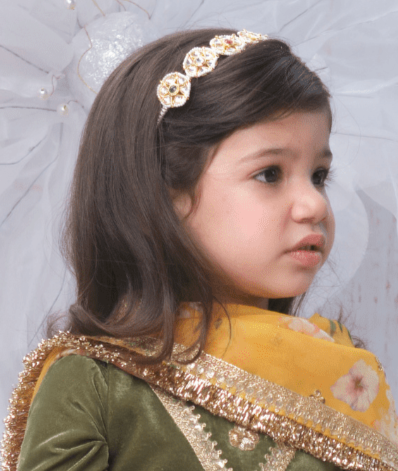















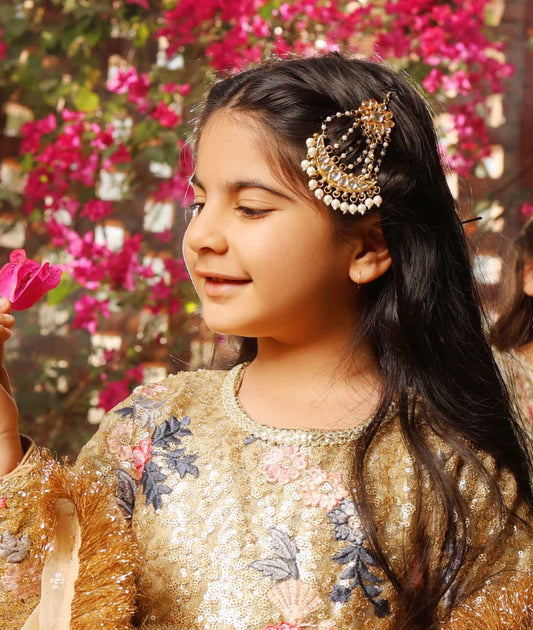

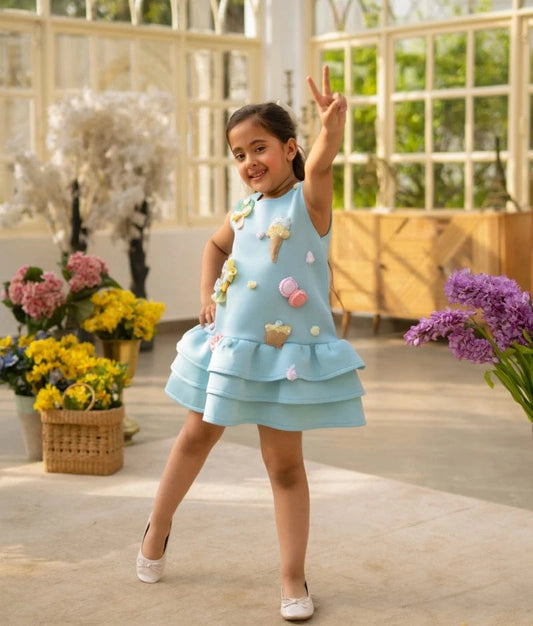

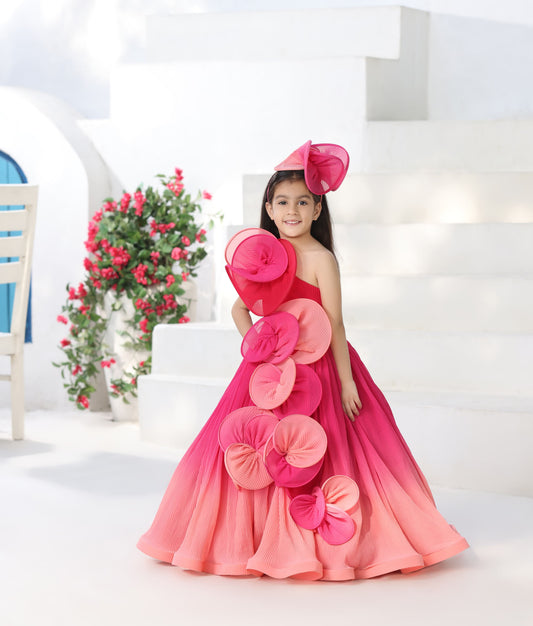

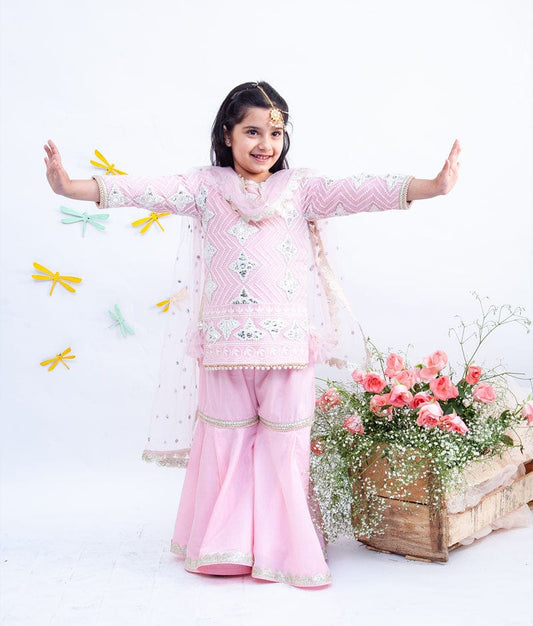


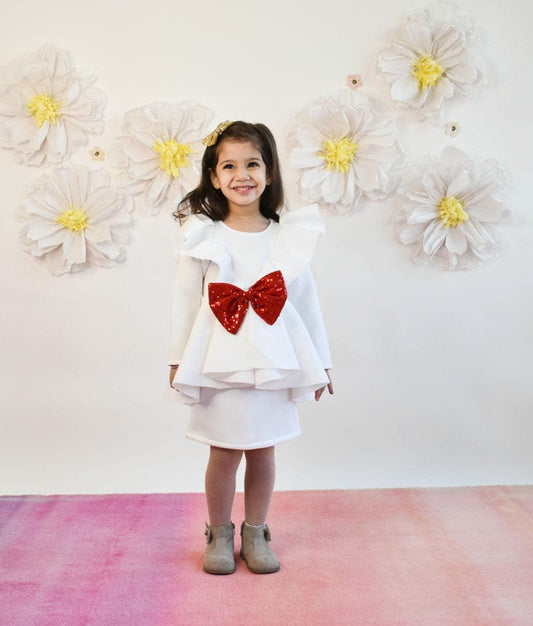

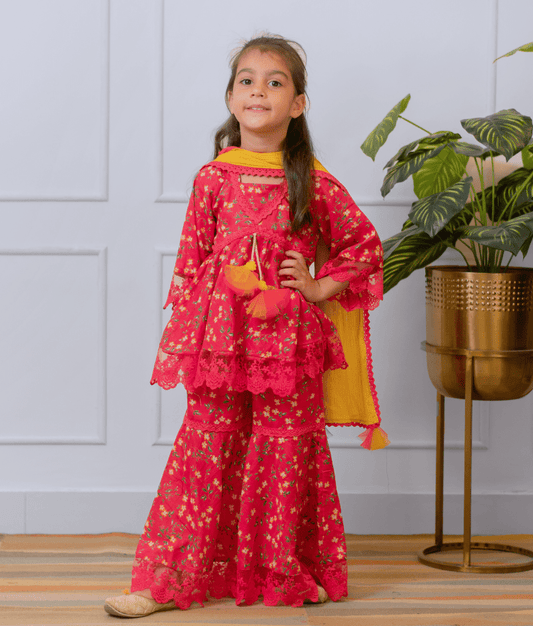

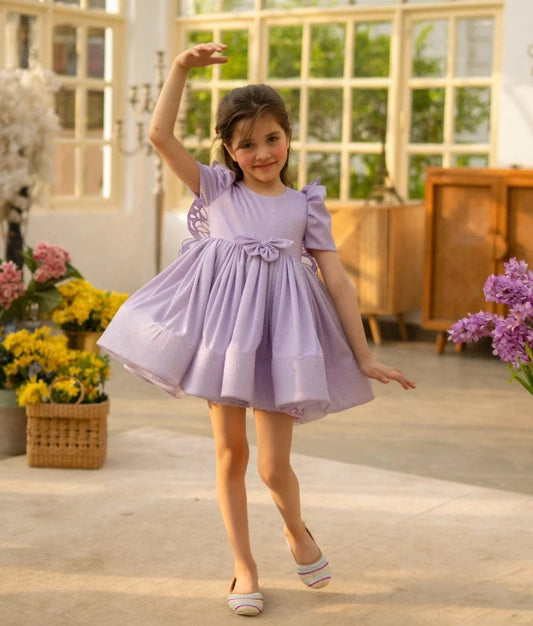

Annaprashan Dress for Baby Girl: Dressing Your Little One for Her First Rice Ceremony
The annaprashan dress for a baby girl is one of the most carefully chosen outfits a family will ever buy, because this ceremony marks a baby girl's first solid food, a milestone that is celebrated with the same weight as any major family occasion in India. The outfit needs to be soft enough for a baby who has no patience for stiff fabrics, light enough to wear through a full ceremonial event, and beautiful enough to anchor family photographs that will be looked at for decades. At Fayon Kids, we design custom-made occasion wear for babies and young children, so every annaprashan outfit is made to your baby's actual measurements and not approximated from a standard size chart.
What Is the Annaprashan Ceremony and Why Does the Outfit Matter?
Annaprashan, also known as the rice ceremony or mukhe bhaat depending on the region, is traditionally observed when a baby is between five and seven months old and is being introduced to solid food for the first time. It is one of the sixteen samskaras in Hindu tradition and is observed across Bengali, Odia, Bihari, Marathi, and many other regional communities in India, each with its own specific rituals and customs.
The ceremony is a family gathering. Photographs are taken. The baby is the centre of attention for the entire event. This is why the outfit carries so much importance. It is not functional as daily wear. It is a ceremonial piece that needs to look intentional, feel gentle on newborn-sensitive skin, and hold its structure long enough for the photographs to be taken.
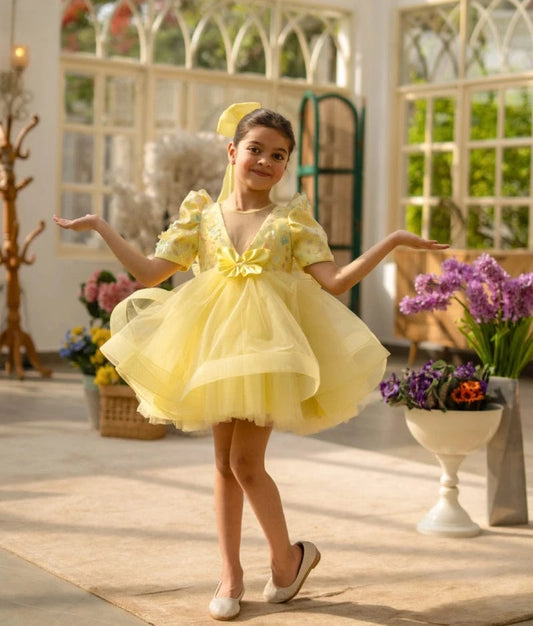
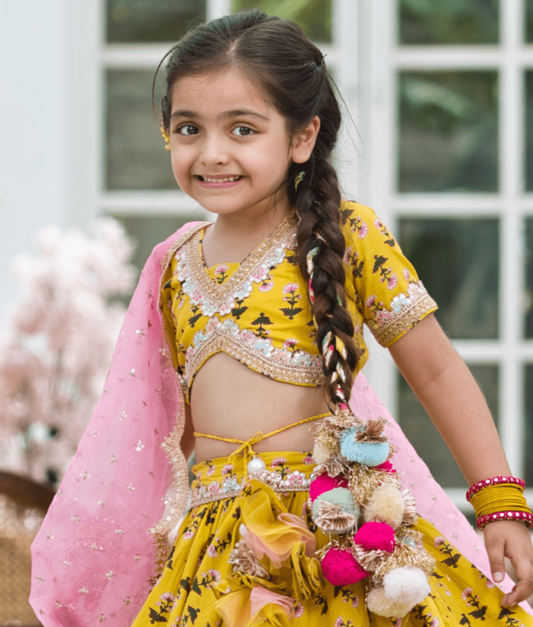
For Bengali families specifically, the annaprashan is called mukhe bhaat and is among the most photographed rituals in the Bengali ceremonial calendar. Yellow is considered auspicious for this occasion, which is why yellow and gold lehengas, anarkalis, and frocks are among the most popular choices for baby girls.
Takeaway: The annaprashan dress for a baby girl carries ceremonial and emotional weight that makes it a category worth investing real thought and care into, well beyond standard baby clothing.
What Styles Work Best as an Annaprashan Dress for a Baby Girl?
Silk Lehenga Sets for Baby Girls
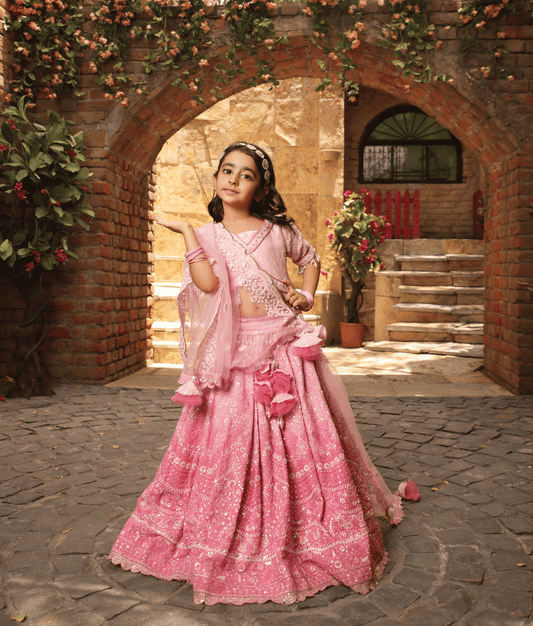
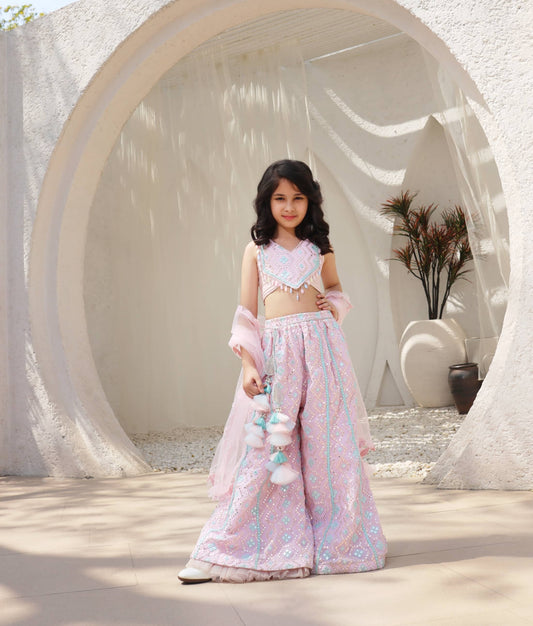
A miniature lehenga set is the most traditional and most photographed choice for an annaprashan. The three-piece construction, a lehenga skirt, a blouse, and a dupatta or odhni, allows the baby to be dressed in something that mirrors what older women in the family are wearing, which creates a lovely visual continuity in group photographs.
For babies between five and eight months, the lehenga skirt needs to be light enough that it does not restrict movement or sitting. A soft silk or silk-cotton blend with minimal boning or stiffening works well. The blouse should have an easy fastening at the back and a soft inner lining against the baby's skin.
Anarkali Frocks and Flowy Gowns
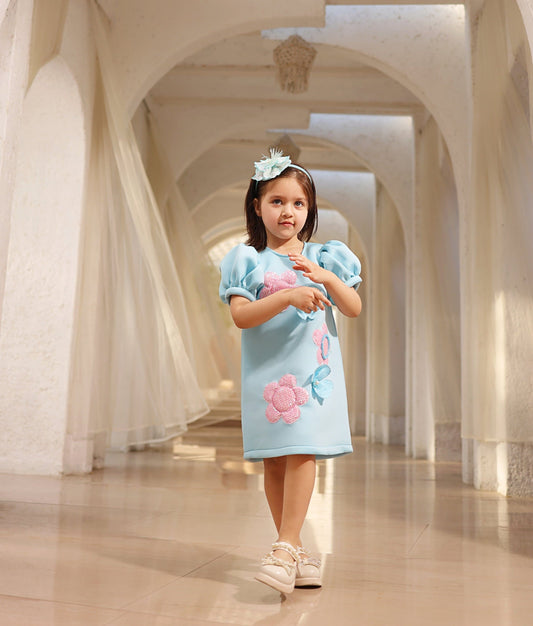
For families who want something easier to manage on a very young baby, an anarkali-style frock or a flowy occasion gown is a practical alternative to a lehenga set. The single-piece construction means less dressing time and less risk of pieces coming undone during the event. These can be made with the same embellishment richness as a lehenga set and photograph equally beautifully.
Traditional Regional Styles
Regional traditions significantly influence annaprashan outfit choices. Bengali families often dress baby girls in a yellow Kanjivaram or Banarasi silk outfit with gold zari work. South Indian families may choose a pavadai set in Kanjivaram silk. North Indian families often gravitate toward embroidered lehenga sets in red, gold, or peach.
Our pret wedding collection includes ready-to-wear occasion pieces for young children that reflect this range of regional influences and give a strong sense of the design vocabulary Fayon Kids works within.
|
Style |
Best For |
Key Feature |
|
Silk Lehenga Set |
Traditional ceremonies, formal family events |
Mirrors adult women's wear, highly photogenic |
|
Anarkali Frock |
Babies who need ease of movement |
Single piece, easier to manage |
|
Pavadai Set |
South Indian ceremonies |
Traditional regional silhouette |
|
Embroidered Gown |
Contemporary families |
Elegant, versatile, single piece |
|
Banarasi Silk Kurta Set |
North Indian and Bengali traditions |
Rich fabric, ceremonial weight |
Takeaway: The best annaprashan dress style for a baby girl is the one that balances regional tradition, family preference, and practical comfort for the specific age of the baby.
What Colours Are Traditionally Chosen for Annaprashan Baby Girl Outfits?
Colour choice for an annaprashan is guided by a combination of regional tradition, family custom, and personal preference. Unlike wedding wear, where colour conventions are more universally understood, annaprashan colour choices vary more widely across communities.
Yellow and Gold: Considered auspicious across many Indian communities, particularly in Bengali and Odia traditions. Yellow symbolises new beginnings, prosperity, and the earth, all of which are thematically connected to the annaprashan ceremony.
Red and Gold: Traditional across North Indian Hindu communities. Red carries auspiciousness and is associated with celebration and festivity.
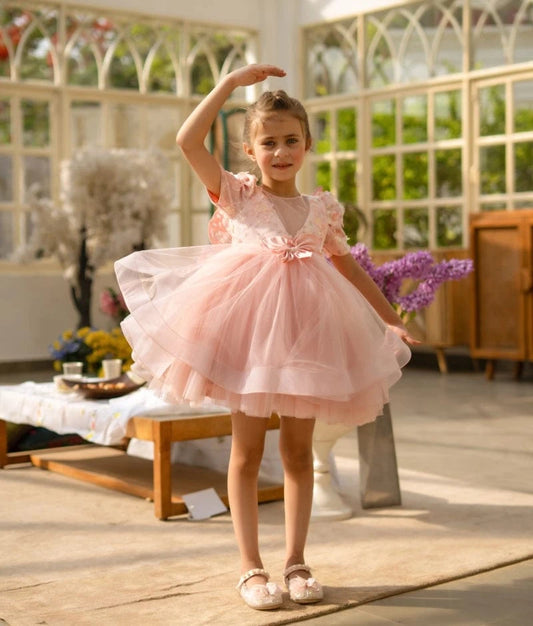
Peach, Blush, and Pastel: A growing choice among urban families who want something that reads as ceremonial without being as heavily traditional in colour. These shades photograph beautifully and work well with gold embellishment.
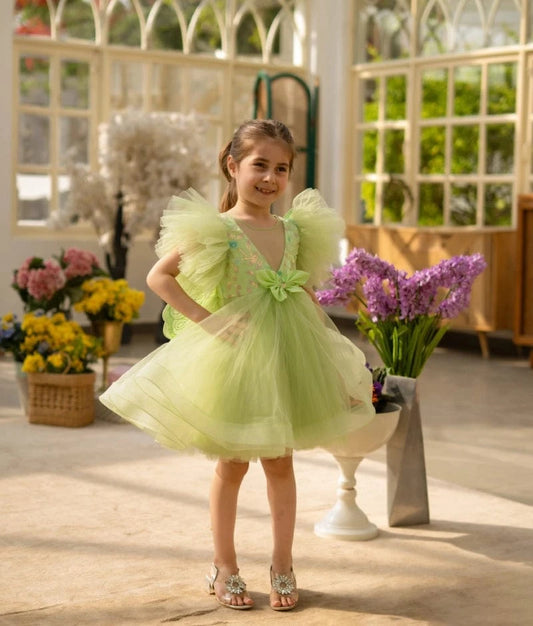
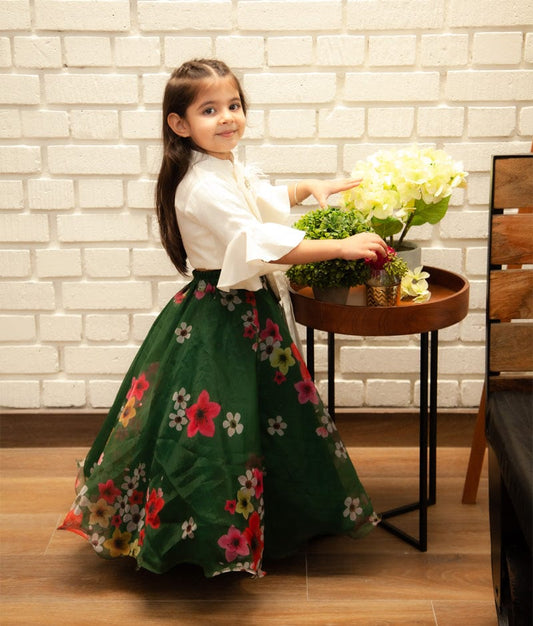
Green: Considered auspicious in several regional traditions and increasingly popular as a fresh, nature-connected colour for a ceremony that celebrates the beginning of nourishment.
Ivory and Cream: A contemporary choice that works well for families who want a timeless, refined look for the ceremony photographs.
|
Color |
Cultural Association |
Occasion Suitability |
|
Yellow and Gold |
Auspiciousness, new beginnings (Bengali, Odia) |
Highly traditional, strongly ceremonial |
|
Red and Gold |
Festivity, celebration (North Indian) |
Traditional, formal |
|
Peach and Blush |
Contemporary, soft, photogenic |
Modern families, urban settings |
|
Green |
Nature, nourishment, auspiciousness |
Regional traditions, fresh aesthetic |
|
Ivory and Cream |
Timeless, refined, versatile |
Contemporary, non-traditional families |
Takeaway: Colour choice for an annaprashan baby girl outfit is best made with the family's regional tradition as the primary guide and personal preference as the secondary layer.
What Fabrics Are Safe and Appropriate for a Baby's Annaprashan Outfit?
Fabric is the most important practical consideration for an annaprashan outfit because the baby wearing it is typically between five and eight months old. At this age, the skin is sensitive, and the baby has no tolerance for rough textures, stiff interlinings, or heavy embellishments that press against the body.
The key principle is that the outer fabric can be as rich and embellished as the occasion demands, but the inner lining must be soft, breathable, and completely smooth against the baby's skin.
Soft Silk and Silk Blends: Pure silk is gentle on baby skin and has a natural breathability that synthetic alternatives lack. Silk blends that combine silk with cotton or modal offer the visual richness of silk with added softness and flexibility.
Chanderi: One of the best fabrics for young babies in ceremonial wear. It is lightweight, has a natural sheen, and takes embroidery and embellishment beautifully without becoming heavy.
Cotton Silk: Practical and comfortable, cotton silk combines the appearance of silk with the breathability of cotton. It is a strong choice for annaprashan ceremonies held in warmer months.
Fabrics to Use Carefully: Heavy Banarasi brocade, stiff taffeta, and thick dupion silk are all beautiful but can be uncomfortable for very young babies if used as the primary body fabric. These work better as accent fabrics, border materials, or in outfits for babies who are slightly older and more physically settled.
Takeaway: The outer richness of an annaprashan outfit for a baby girl should always be balanced by a soft, breathable lining that keeps the baby comfortable through the event.
How Should You Accessorise an Annaprashan Outfit for a Baby Girl?
Accessories for a baby's ceremonial outfit should be minimal, secure, and age-appropriate. The outfit itself carries the visual weight of the occasion. Accessories are meant to complement it without adding any physical discomfort or safety concern.
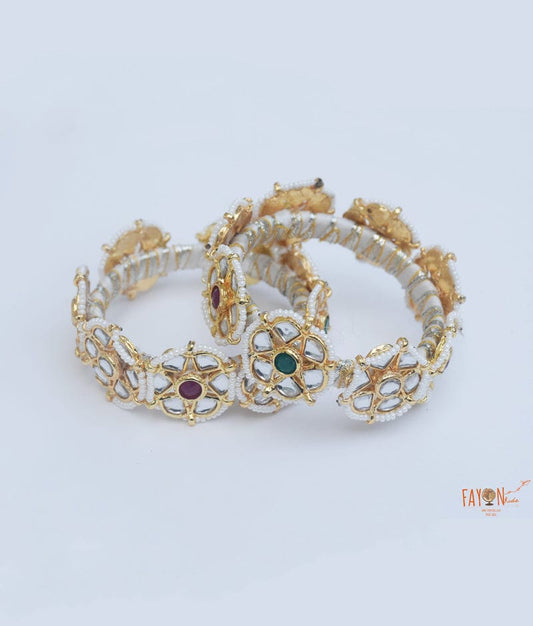
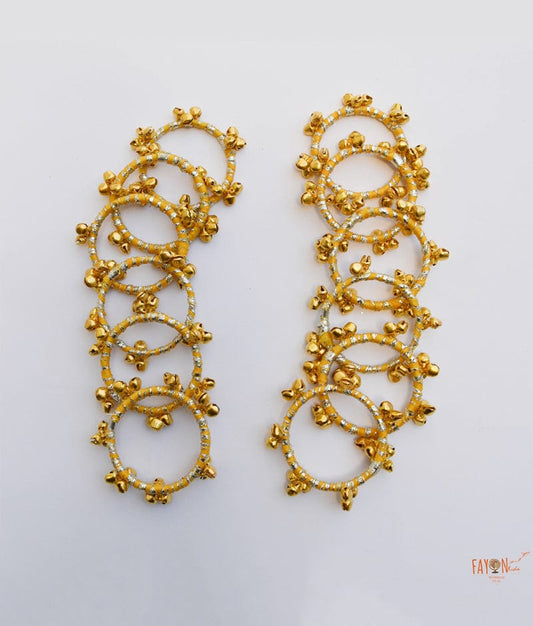
Jewellery: Gold jewellery is traditional for annaprashan in many communities. A thin gold bangle, small ear studs, and a delicate nath or nose pin are commonly worn, depending on regional tradition. All jewellery worn by babies must be smooth, properly fitted, and free of any parts that could be pulled off or pressed uncomfortably into the skin.
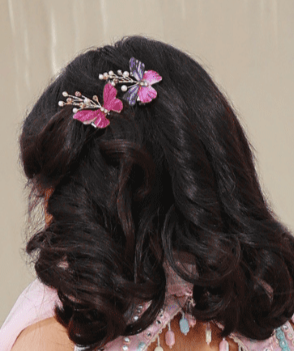
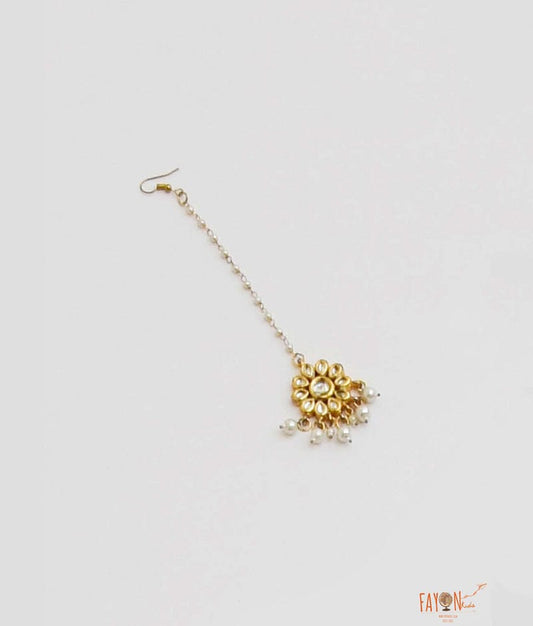
Hair Accessories: A simple hair clip, a delicate maang tikka for families who observe the tradition, or a small floral accessory are the most appropriate choices. Avoid anything with sharp edges or loose decorative elements.
Footwear: Babies at this age are not walking, so footwear is purely decorative. Soft mojris, small silk slippers, or booties in a matching fabric are charming choices that complete the look without causing any discomfort.
Takeaway: Accessorising a baby girl's annaprashan outfit is about adding cultural and visual completeness to the look, not about layering on decoration. Less is more at this age.
Why Does Custom-Made Work Better Than Ready-Made for Annaprashan Outfits?
Babies between five and eight months old do not conform to standard clothing sizes in the way older children do. Their proportions are specific: short torsos, rounded abdomens, and very short limbs relative to body size. A standard size four or six months in ethnic occasion wear is built on general averages that may or may not reflect your baby's actual measurements.
A custom-made annaprashan outfit is built from your baby's actual measurements. The lehenga skirt falls at the right length for her specific torso and leg length. The blouse fits the actual width of her shoulders and the circumference of her chest. The armholes are sized so they do not dig in or gap open during the ceremony.
For families looking at the full range of occasions their baby girl will be dressed for across the first few years, our wedding dress for kids collection gives a comprehensive view of the occasion wear possibilities available at different ages and milestones.
Takeaway: Custom-made annaprashan outfits produce a better physical and visual result for babies because baby proportions are too individual and too specific for standard sizing to reliably accommodate.
Frequently Asked Questions
Q1: What age is the annaprashan ceremony typically observed?
The annaprashan ceremony is traditionally observed when a baby is between five and seven months old, though the exact timing varies by regional community and family custom. Some families observe it at six months, others wait until seven or eight months depending on the baby's developmental readiness.
Q2: What color should I choose for my baby girl's annaprashan outfit?
Color choice depends largely on your family's regional tradition and personal preference. Yellow and gold are traditional in Bengali and Odia communities. Red and gold are common in North Indian families. Pastels and soft pinks are increasingly popular among contemporary urban families. There is no single universally correct color, so following your family's tradition is always a reliable guide.
Q3: How do I take measurements for a baby's custom annaprashan outfit?
The Fayon Kids team will guide you through the measurement process when you place your order. Key measurements include chest circumference, torso length from shoulder to waist, waist circumference, and the desired skirt length. Taking measurements close to the order date, rather than weeks in advance, ensures the outfit accounts for the baby's growth.
Q4: Can the annaprashan outfit be reused for other occasions?
Yes, in many cases. A well-made anarkali frock or gown can be worn again for other ceremonies or family events if the baby is still within the size range. Lehenga sets with adjustable drawstring waistbands also have some flexibility. Since babies grow quickly, repurposing the outfit within a few months is more realistic than expecting it to serve for an extended period.
Q5: How far in advance should I order a baby girl's annaprashan outfit?
We recommend placing the order at least four to five weeks before the ceremony date. This allows sufficient time for design finalization, tailoring to the baby's measurements, and delivery. For international orders, allowing six to eight weeks is advisable.