


-
Regular price Rs.3,155Sale price Rs.3,155 Regular priceUnit price per
Ships in 5-6 days.
Get it by Thu, Nov 26 – Fri, Nov 27
-
Regular price Rs.3,814Sale price Rs.3,814 Regular priceUnit price per
Rs.4,238Ships in 5-6 days.
Get it by Thu, Nov 26 – Fri, Nov 27
Sale -
Regular price Rs.7,404Sale price Rs.7,404 Regular priceUnit price per
Ships in 5-6 days.
Get it by Thu, Nov 26 – Fri, Nov 27
-
Regular price Rs.3,851Sale price Rs.3,851 Regular priceUnit price per
Rs.6,418Ships in 5-6 days.
Get it by Thu, Nov 26 – Fri, Nov 27
Sale -
Regular price Rs.3,541Sale price Rs.3,541 Regular priceUnit price per
Ships in 5-6 days.
Get it by Thu, Nov 26 – Fri, Nov 27
-
Regular price Rs.1,800Sale price Rs.1,800 Regular priceUnit price per
Ships in 5-6 days.
Get it by Thu, Nov 26 – Fri, Nov 27
-
Regular price Rs.1,800Sale price Rs.1,800 Regular priceUnit price per
Ships in 5-6 days.
Get it by Thu, Nov 26 – Fri, Nov 27
-
Regular price Rs.3,541Sale price Rs.3,541 Regular priceUnit price per
Ships in 5-6 days.
Get it by Thu, Nov 26 – Fri, Nov 27
-
Regular price Rs.1,800Sale price Rs.1,800 Regular priceUnit price per
Ships in 5-6 days.
Get it by Thu, Nov 26 – Fri, Nov 27
-
Regular price Rs.13,917Sale price Rs.13,917 Regular priceUnit price per
Ships in 5-6 days.
Get it by Thu, Nov 26 – Fri, Nov 27
-
Regular price Rs.8,981Sale price Rs.8,981 Regular priceUnit price per
Ships in 5-6 days.
Get it by Thu, Nov 26 – Fri, Nov 27
-
Regular price Rs.5,504Sale price Rs.5,504 Regular priceUnit price per
Rs.5,504Ships in 5-6 days.
Get it by Thu, Nov 26 – Fri, Nov 27
-
Regular price Rs.3,670Sale price Rs.3,670 Regular priceUnit price per
Ships in 5-6 days.
Get it by Thu, Nov 26 – Fri, Nov 27
-
Regular price Rs.11,020Sale price Rs.11,020 Regular priceUnit price per
Ships in 5-6 days.
Get it by Thu, Nov 26 – Fri, Nov 27
-
Regular price Rs.3,737Sale price Rs.3,737 Regular priceUnit price per
Ships in 5-6 days.
Get it by Thu, Nov 26 – Fri, Nov 27
-
Regular price Rs.3,851Sale price Rs.3,851 Regular priceUnit price per
Rs.6,418Ships in 5-6 days.
Get it by Thu, Nov 26 – Fri, Nov 27
Sale -
Regular price Rs.10,111Sale price Rs.10,111 Regular priceUnit price per
Ships in 5-6 days.
Get it by Thu, Nov 26 – Fri, Nov 27
-
Regular price Rs.11,511Sale price Rs.11,511 Regular priceUnit price per
Ships in 5-6 days.
Get it by Thu, Nov 26 – Fri, Nov 27
-
Regular price Rs.4,606Sale price Rs.4,606 Regular priceUnit price per
Ships in 5-6 days.
Get it by Thu, Nov 26 – Fri, Nov 27
-
Regular price Rs.5,273Sale price Rs.5,273 Regular priceUnit price per
Ships in 5-6 days.
Get it by Thu, Nov 26 – Fri, Nov 27
-
Regular price Rs.10,594Sale price Rs.10,594 Regular priceUnit price per
Ships in 5-6 days.
Get it by Thu, Nov 26 – Fri, Nov 27
-
Regular price Rs.6,441Sale price Rs.6,441 Regular priceUnit price per
Ships in 5-6 days.
Get it by Thu, Nov 26 – Fri, Nov 27
-
Regular price Rs.11,270Sale price Rs.11,270 Regular priceUnit price per
Ships in 5-6 days.
Get it by Thu, Nov 26 – Fri, Nov 27
-
Regular price Rs.6,441Sale price Rs.6,441 Regular priceUnit price per
Ships in 5-6 days.
Get it by Thu, Nov 26 – Fri, Nov 27


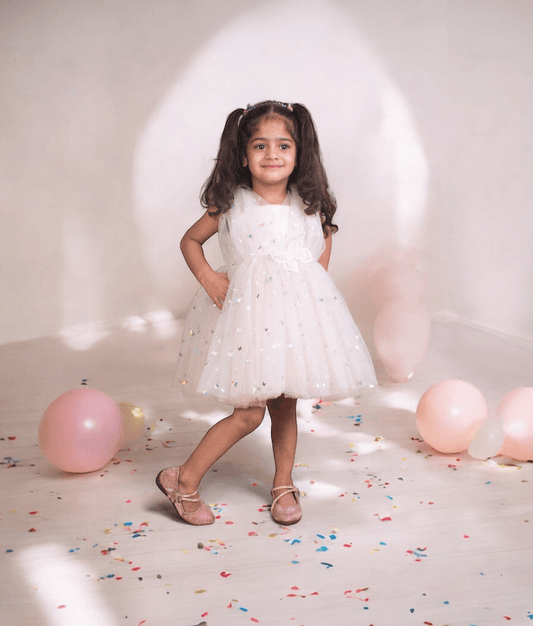


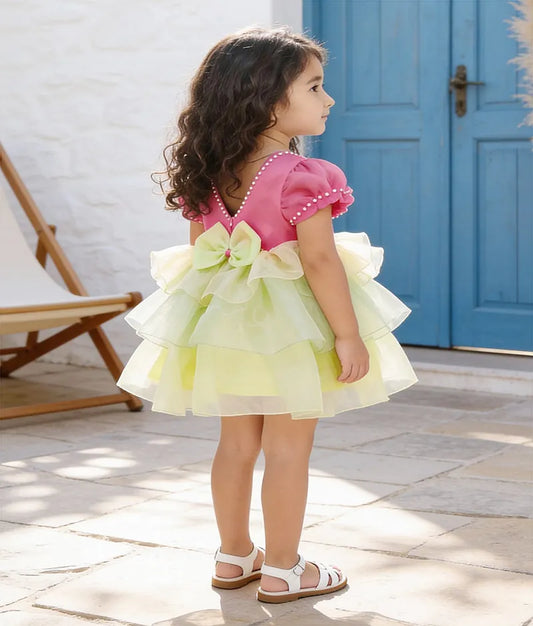


Frock for Girls: The Complete Buying Guide Every Parent Needs in 2026
A frock for girls is one of the most versatile clothing items in a child's wardrobe, spanning casual playwear to structured occasion dressing. With hundreds of styles, fabrics, and size ranges available across Indian and global markets, choosing the right one requires more than a quick scroll. This guide breaks down every key decision point so parents can shop with confidence.
Understanding Frock Styles and Silhouettes for Girls
The Most Common Frock Silhouettes Explained
The fit-and-flare silhouette remains the most popular frock style for girls aged 2 to 12, offering ease of movement and a flattering shape across most body types. A-line frocks sit close at the bodice and flare gently from the waist, making them ideal for both school and casual outings. Midi frocks, falling between the knee and ankle, have grown in demand through 2025 and into 2026 as parents seek more modest, weather-appropriate options.
Occasion-Specific Frock Categories
Everyday frocks prioritize durability and ease of washing, typically featuring simple cuts, elastic waistbands, and minimal embellishment. Frocks for school or playwear use reinforced stitching at stress points and avoid delicate trims that snag easily. When shopping for a birthday dress for girls, note that these carry different construction standards, fabric weights, and price brackets compared to standard everyday frocks.
-
Fit-and-flare: Best for active girls; allows full range of motion.
-
A-line: Universally flattering; works for school and casual wear.
-
Midi length: Ideal for cooler climates and modest dressing preferences.
-
Shirt frock: Structured collar and button placket; great for semi-formal settings.
-
Pinafore frock: Layered over a top; popular for school uniforms and casual looks.
Fabric Selection: What Actually Matters for Girls' Frocks
Breathability and Skin Safety Standards
Cotton and cotton-blend fabrics dominate the girls' frock market: they are breathable, hypoallergenic, and machine washable, reducing the cost of ownership over time. OEKO-TEX Standard 100 certification is the most widely recognized textile safety benchmark, confirming a fabric has been tested for harmful substances at every production stage. Parents buying for toddlers should specifically look for this certification, as young skin is more reactive to chemical residues in synthetic dyes.
Fabric Performance by Season and Climate
Georgette and chiffon frocks offer lightweight drape suited to warm, humid climates but require hand washing to prevent permanent creasing. Rayon blends mimic cotton softness while holding printed patterns more vividly, though they shrink more readily in hot water. For a first birthday dress for baby girl, velvet and brocade fabrics hold structure beautifully but require dry cleaning, a recurring cost parents should factor into the total price.
|
Fabric Type |
Best Season |
Care Requirement |
Typical Price Range (INR) |
|
100% Cotton |
Summer / Year-round |
Machine wash, cold |
300 - 900 |
|
Cotton-Polyester Blend |
Year-round |
Machine wash, warm |
250 - 700 |
|
Rayon / Viscose |
Spring / Summer |
Hand wash or gentle cycle |
400 - 1,200 |
|
Georgette / Chiffon |
Summer / Festive |
Hand wash only |
600 - 2,000 |
|
Velvet / Brocade |
Winter / Festive |
Dry clean recommended |
900 - 3,500 |
How to Choose the Right Frock Size for Girls
Reading Size Charts Accurately
Indian children's clothing brands typically size frocks by age, but body measurements are far more reliable since children of the same age can vary by several centimetres in chest and hip circumference. The three measurements that matter most are chest circumference, waist circumference, and dress length from shoulder to hem. If a child falls between two sizes, always size up; a slightly longer hem is easy to adjust, but a tight bodice cannot be corrected without tailoring.
Growth Allowance and Longevity Planning
Children between ages 3 and 8 grow an average of 5 to 7 centimetres per year, meaning a frock without growth allowance may be outgrown within a single season. Frocks with adjustable straps, elasticated waistbands, or generous hem allowances extend wearable life by 6 to 12 months. This is especially relevant when choosing winter dresses for girls, where premium brands like Fayonkids build in these structural allowances as standard, justifying a higher upfront price for parents thinking long-term.
-
Measure chest circumference at the fullest point, keeping the tape parallel to the floor.
-
Measure waist at the natural waistline, one inch above the navel.
-
Measure dress length from the top of the shoulder straight down to the desired hemline.
-
Cross-reference all three measurements against the brand's specific size chart, not a generic age guide.
-
Add 2 to 3 centimetres of ease to chest and waist measurements for a comfortable fit.
Quality Inspection and Value Assessment Before You Buy
Construction Details That Signal Quality
Seam finishing is the single most reliable quality indicator: a well-made frock uses French seams or overlocked edges internally, preventing fraying after repeated washing. Zipper and button placement should be smooth and recessed, with no sharp edges that could scratch a child's skin. Checking stitching density at the underarm and side seams before purchase reveals whether a frock will hold up to daily use or begin unravelling within weeks.
Price-to-Quality Benchmarks in the 2026 Market
The Indian girls' frock market in 2026 segments into three tiers: mass-market frocks under INR 500, mid-range options between INR 500 and INR 1,500, and premium designer frocks above INR 1,500 using certified fabrics and hand-finished details. Mass-market frocks often use single-needle stitching and unfinished internal seams, reducing durability after repeated washing. For parents seeking longevity and skin-safe materials, including party wear western dresses, investing in the mid-to-premium tier from curated platforms like Fayonkids delivers measurable value over buying multiple low-cost replacements each season.
|
Quality Indicator |
What to Check |
Pass Criteria |
|
Seam finishing |
Turn garment inside out |
Overlocked or French seams; no raw edges |
|
Stitching density |
Count stitches per inch at stress points |
Minimum 10 to 12 stitches per inch |
|
Zipper quality |
Slide zipper up and down three times |
Smooth movement; no snagging on fabric |
|
Fabric certification |
Check label or product listing |
OEKO-TEX Standard 100 or equivalent |
|
Color fastness |
Dampen a white cloth and rub on fabric |
No color transfer after three rubs |
-
Avoid: Frocks with exposed metal hardware near the neckline on garments for toddlers. -
Avoid: Heavily embellished frocks with glued-on stones for children under 5, as stones detach and pose choking risks.
-
Prefer: Sewn-on embellishments and embroidery over heat-pressed prints for durability.
-
Prefer: Side or back zip closures over front buttons for ease of dressing young children.
Frequently Asked Questions
What is the difference between a frock and a dress for girls?
In Indian retail terminology, a frock typically refers to a one-piece garment with a fitted bodice and a flared or gathered skirt, while "dress" is a broader term that includes all one-piece garments regardless of silhouette.
Which fabric is best for a frock for girls in summer?
100% cotton or cotton-blend fabrics are the best choice for summer frocks because they are breathable, absorb sweat efficiently, and are safe for sensitive skin.
How do I know if a frock will shrink after washing?
Check the fabric composition label: rayon and viscose blends shrink most in hot water, while pre-washed cotton and polyester blends are the most dimensionally stable after repeated machine washing.
At what age can girls start wearing midi-length frocks comfortably?
Midi frocks are generally practical for girls aged 4 and above, as younger toddlers may trip on longer hemlines during active play.
How many frocks should a girl have in her wardrobe?
A practical wardrobe for a school-age girl typically includes 5 to 7 everyday frocks and 1 to 2 occasion frocks, allowing for rotation without over-purchasing.


