



-
Regular price Rs.3,303Sale price Rs.3,303 Regular priceUnit price per
Ships in 5-6 days.
Get it by Sun, Aug 09 – Mon, Aug 10
-
Regular price Rs.3,831Sale price Rs.3,831 Regular priceUnit price per
Ships in 5-6 days.
Get it by Sun, Aug 09 – Mon, Aug 10
-
Regular price Rs.7,436Sale price Rs.7,436 Regular priceUnit price per
Ships in 5-6 days.
Get it by Sun, Aug 09 – Mon, Aug 10


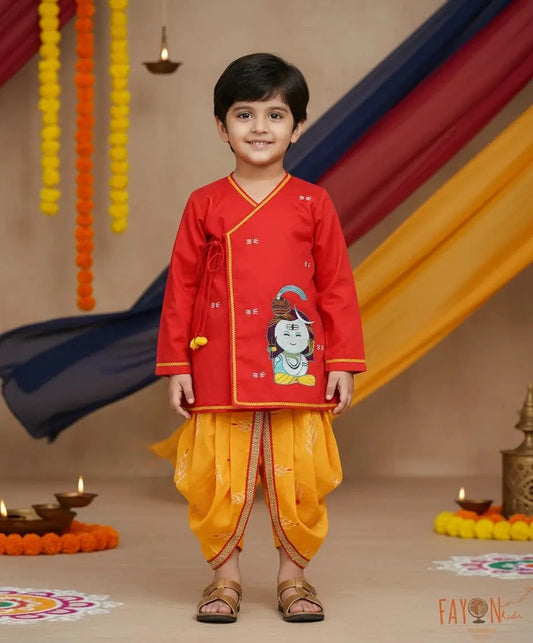

Kids Dhoti Kurta Set Boys: Everything You Need to Know Before You Buy
The dhoti kurta set for boys is one of the most culturally rooted garments in the Indian ethnic wear wardrobe. It predates the sherwani, predates the bandhgala, and has remained a continuous part of Indian ceremonial dressing across generations. Yet when parents search for a kids dhoti kurta set for boys online, the options range from beautifully made traditional sets to poorly constructed pieces that look nothing like the intended silhouette once they are actually worn.
This guide is structured as a practical information resource. Section by section, it covers what a dhoti kurta set actually consists of, which styles suit which occasions and age groups, how to choose the right fabric, how to navigate sizing, and what makes a well-made dhoti kurta set different from an ordinary one.
What Does a Dhoti Kurta Set for Boys Actually Consist Of?
A complete boys' dhoti kurta set typically includes:
The Kurta: A straight or A-line upper garment, usually falling to mid-thigh or the knee. In a dhoti kurta set, the kurta tends to be simpler and shorter than a sherwani because the dhoti itself carries significant visual weight as the lower garment.
The Dhoti: The lower garment, consisting of a length of unstitched or semi-stitched fabric draped around the waist and legs. For boys' occasion wear, dhotis come in two forms:
- Fully draped dhoti: A length of fabric that is wrapped and tucked around the waist and legs in a specific regional style. This is the most traditional option, but requires a cooperative child and some practice to maintain through an event.
- Pre-stitched dhoti: A dhoti-style garment that has been stitched to resemble the draped look but is worn like a pair of pants with an elasticated or drawstring waist. This is far more practical for young boys and is the dominant choice in boys' ethnic wear today.
The Dupatta or Angavastram: An optional length of fabric worn across the shoulder or around the neck, adding a layer of formality to the overall look. More commonly included in South Indian dhoti styles than North Indian ones.
Regional Variations in Boys' Dhoti Kurta Sets
India's diversity means that the dhoti kurta set looks different depending on the regional tradition it draws from.
|
Region |
Dhoti Style |
Typical Fabric |
Key Characteristics |
|
North India |
Loose wrap with visible pleats |
Cotton, silk, chanderi |
Worn with a shorter kurta, sometimes with a Nehru jacket |
|
South India |
Mundu style, worn lower |
White or off-white cotton, silk |
Often with angavastram across the shoulder |
|
Bengal |
Dhuti style with distinct pleating |
Fine white or cream cotton, silk |
Worn with a Punjabi or a kurta |
|
Maharashtra |
Pancha style |
White cotton |
Associated with Ganesh Chaturthi and traditional ceremonies |
|
Rajasthan |
Dhoti with a distinct regional drape |
Bandhani cotton, silk |
More colorful, festive aesthetic |
Understanding which regional tradition is relevant to your family's ceremony helps narrow the style choice significantly.
Which Occasions Call for a Boys' Dhoti Kurta Set
The dhoti kurta is not universally appropriate for all occasions. It has a specific ceremonial register that suits some events better than others.
Most appropriate occasions:
- Naming ceremonies and naamkaran
- Mundan ceremony
- Annaprashan and other early childhood samskaras
- Puja and religious ceremonies at home or a temple
- Navratri and Ganesh Chaturthi
- South Indian wedding ceremonies
- Janmashtami (particularly for Krishna-inspired dressing)
Appropriate with some styling:
- Wedding receptions in families with traditional preferences
- Family photographs at festivals
- Diwali and Eid celebrations in traditional households
Less appropriate:
- Highly formal, Western-influenced reception events
- Contemporary wedding receptions where sherwanis or bandhgalas are the expected standard
For boys attending occasions that sit between these categories, our boys achkan collection offers a more formal alternative that maintains the ethnic character of the dhoti kurta while reading at a higher formality level.
Fabric Guide for Boys' Dhoti Kurta Sets
Fabric choice depends on the season, the occasion, and the boy's age.
For Ceremonies and Pujas (Year-Round): White or cream cotton dhoti with a chanderi or cotton silk kurta is the most traditional and most appropriate combination for home and temple ceremonies. The fabric is breathable, easy to manage, and correctly positioned within the ceremony's aesthetic.
For Weddings and Formal Events: Silk or silk-blend dhoti kurta sets carry the visual richness required for a formal family occasion. Kanjivaram silk for South Indian ceremonies, Banarasi silk for North Indian contexts, and raw silk for a lighter, more contemporary take all work well.
For Festivals: Chanderi, printed cotton, and bandhani are all appropriate for festive occasions. The fabric can carry more color and print at a festival than at a ceremony.
For Janmashtami Specifically: Yellow or saffron chanderi or cotton silk for the full Krishna-inspired look. This specific color and fabric combination is so strongly associated with the festival that it reads immediately as intentional festival dressing rather than generic ethnic wear.
For boys' festive kurta options that coordinate naturally with dhoti sets across different occasions, our kids' ethnic wear collection includes a range of styles in appropriate fabrics for boys across all age groups.
How to Dress a Boy in a Dhoti Kurta: A Practical Step-by-Step
For parents who have not dressed a young boy in a dhoti before, the process can feel intimidating. Here is a straightforward guide.
For a pre-stitched dhoti:
- Dress the boy in the kurta first and ensure it sits correctly at the shoulders and length
- Step the dhoti on like a pair of trousers and secure the drawstring or elastic at the waist
- Arrange the front pleats so they fall centrally and drape naturally
- Ensure the hem of the dhoti falls at the correct length: typically at the ankle or just above
- Add the angavastram or dupatta across the shoulder if included in the set
For a fully draped dhoti:
- Dress the boy in the kurta first
- Begin the dhoti drape from the right side, tucking the starting edge into the waist
- Pass the fabric around the body once and tuck securely
- Create the front pleats and tuck them into the centre front waistband
- Pass the remaining fabric between the legs and tuck it at the back
The pre-stitched option is strongly recommended for boys under eight years because maintaining a fully draped dhoti on an active young child through a long event is genuinely challenging.
Sizing and Fit for a Boys' Dhoti Kurta Set
The kurta in a dhoti kurta set follows the same measurement logic as any boys' kurta: chest circumference, shoulder width, sleeve length, and desired kurta length from shoulder to hem.
The dhoti sizing in a pre-stitched set depends on:
- Waist circumference
- Hip circumference
- Desired length from waist to ankle
For custom-made dhoti kurta sets where both pieces are made to the boy's actual measurements, the result is a garment that looks intentional and fits correctly rather than approximating the right size from a standard age chart.
For families planning a complete wedding function wardrobe for boys, including dhoti kurta, sherwani, and other occasion pieces, our wedding dress for kids collection provides a comprehensive view of the boys' occasion wear range available across different formal and semi-formal contexts.
Looking for the perfect kids dhoti kurta set for your boy? Contact Fayon Kids with his measurements and occasion details for a custom-made set.
Frequently Asked Questions
Q1: At what age is it appropriate for a boy to start wearing a dhoti kurta set?
From the naming ceremony onwards, boys of any age can wear a dhoti kurta set. For very young babies, a pre-stitched version in soft fabric is the most practical option.
Q2: Is a fully draped dhoti practical for a young, active boy?
For boys under eight years who are physically active, a pre-stitched dhoti is significantly more practical. It gives the same visual result without the management challenge of maintaining a proper drape through an event.
Q3: What footwear goes with a boy's dhoti kurta set?
Traditional mojris or juttis are the most appropriate footwear for a dhoti kurta look. For South Indian dhoti sets, simple Kolhapuri sandals or decorated rubber sandals in white or gold are also traditional.
Q4: Can a boy's dhoti kurta set be worn for a wedding ceremony?
Yes, particularly in South Indian wedding traditions, where the dhoti is the standard ceremonial garment for boys and men. In North Indian contexts, the dhoti kurta is more appropriate for pre-wedding ceremonies and pujas than for the main wedding reception.
Q5: What colors are most traditional for a boy's ceremony dhoti kurta?
White and cream are the most traditional colors for ceremonial dhoti kurta sets, particularly for naming ceremonies and pujas. Yellow, saffron, and gold are appropriate for festivals. Rich silk colors like red, blue, and gold are suitable for weddings.
Q6: How do I maintain a silk dhoti kurta set after use?
Silk dhoti kurta sets should be dry-cleaned after use. Store in a breathable muslin bag away from direct sunlight. Do not fold along the same creases repeatedly, as this can cause permanent lines in the fabric over time.
