



-
Regular price Rs.3,477Sale price Rs.3,477 Regular priceUnit price per
Rs.3,863Ships in 5-6 days.
Get it by Sat, Oct 10 – Sun, Oct 11
Sale -
Regular price Rs.3,187Sale price Rs.3,187 Regular priceUnit price per
Rs.5,311Ships in 5-6 days.
Get it by Sat, Oct 10 – Sun, Oct 11
Sale -
Regular price Rs.4,185Sale price Rs.4,185 Regular priceUnit price per
Ships in 5-6 days.
Get it by Sat, Oct 10 – Sun, Oct 11
-
Regular price Rs.4,185Sale price Rs.4,185 Regular priceUnit price per
Ships in 5-6 days.
Get it by Sat, Oct 10 – Sun, Oct 11
-
Regular price Rs.3,541Sale price Rs.3,541 Regular priceUnit price per
Ships in 5-6 days.
Get it by Sat, Oct 10 – Sun, Oct 11
-
Regular price Rs.5,902Sale price Rs.5,902 Regular priceUnit price per
Ships in 5-6 days.
Get it by Sat, Oct 10 – Sun, Oct 11
-
Regular price Rs.11,588Sale price Rs.11,588 Regular priceUnit price per
Ships in 5-6 days.
Get it by Sat, Oct 10 – Sun, Oct 11





Kids Ethnic Wear Girls: The Definitive Style and Buying Guide for 2026
Choosing kids' ethnic wear for girls goes far beyond picking a pretty colour. Fabric weight, silhouette suitability for the occasion, regional craft traditions, and size accuracy all determine whether a garment actually works on the day it matters. This guide cuts through the noise with research-backed criteria so every purchase earns its place in the wardrobe.
Understanding the Core Categories of Girls Ethnic Wear
Garment Types and Their Occasion Fit
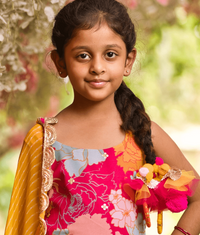
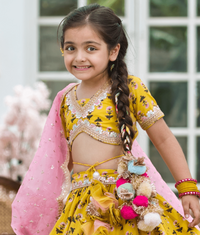
Girls ethnic wear broadly divides into lehenga cholis, salwar kameez sets, anarkali suits, sharara sets, and indo-western fusion kurtas. Each silhouette carries a distinct occasion weight: lehenga cholis suit weddings and festive pujas, while straight-cut salwar kameez sets work for school cultural events and casual family gatherings. Whether you need a birthday dress for girls or a wedding outfit, knowing this distinction upfront prevents the common mistake of over-dressing or under-dressing a child for the event.
-
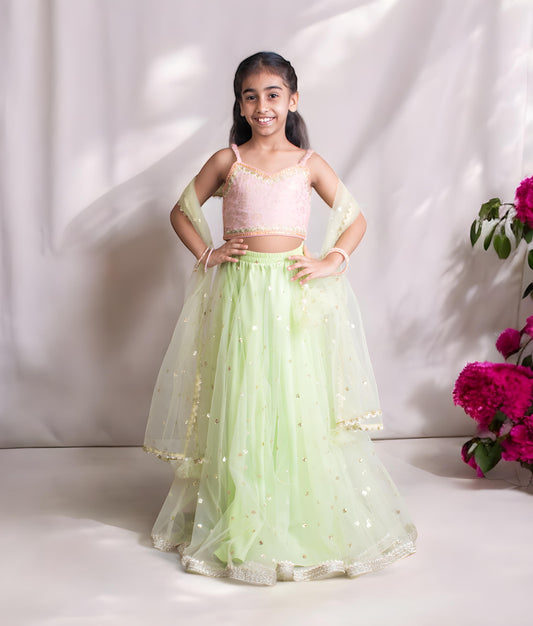
Lehenga Choli: Full circular or flared skirt paired with a fitted blouse; best for weddings and Navratri.
-
Anarkali Suit: Long flared kurta over churidar; ideal for Eid, Diwali, and formal family functions.
-
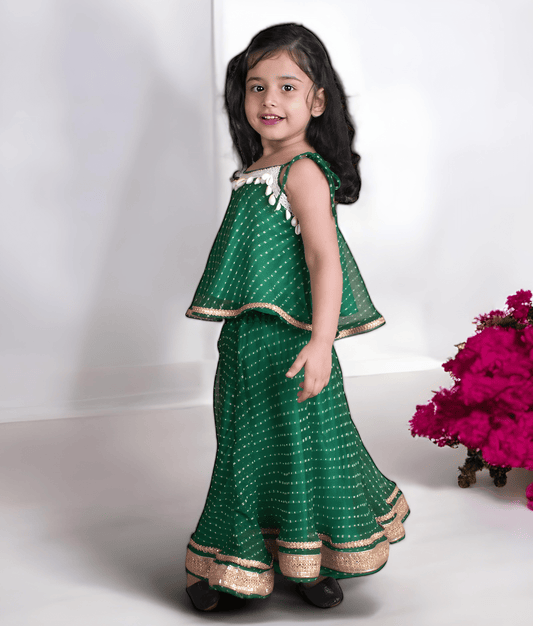
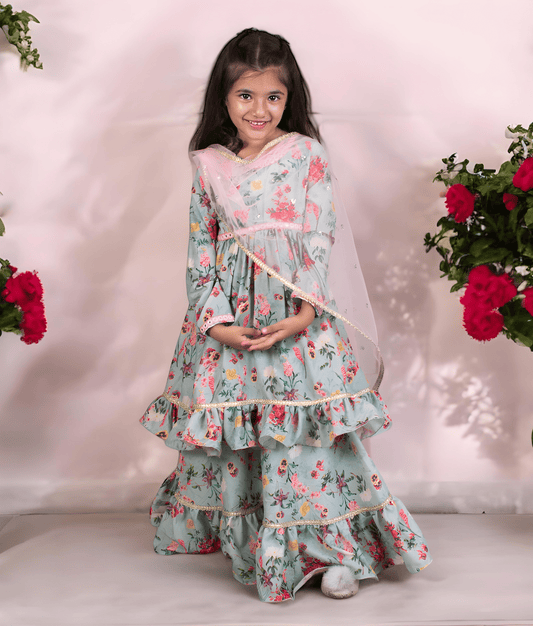
Sharara Set: Wide-leg divided skirt with short kurta; growing in popularity for sangeet and mehendi events.
-
Salwar Kameez: Straight or semi-flared kurta with salwar; the most versatile everyday ethnic option.
-
Indo-Western Kurta: Shorter kurta with palazzos or jeans; suits school annual days and casual festive wear.
Regional Craft Traditions That Define Quality
Indian ethnic wear for girls draws from distinct regional craft clusters: Jaipur block prints, Lucknow chikankari embroidery, Banarasi brocade weaving, and Tiruppur knit-based ethnic fusion are the four most commercially significant. Understanding origin helps buyers assess whether embroidery is hand-done or machine-replicated, which directly affects durability after repeated washing.
|
Craft Origin |
Signature Technique |
Best Garment Type |
Price Range (INR) |
|
Jaipur |
Block printing, gota patti |
Lehenga, salwar set |
800 - 2,500 |
|
Lucknow |
Chikankari hand embroidery |
Anarkali, kurta |
1,200 - 4,000 |
|
Varanasi |
Banarasi brocade weaving |
Lehenga choli |
2,000 - 8,000 |
|
Tiruppur |
Knit-ethnic fusion, digital print |
Indo-western kurta |
400 - 1,500 |
Fabric Selection: What Parents Must Inspect Before Buying
Skin-Safe Fabrics for Different Age Groups
Children's skin is significantly more sensitive to synthetic irritants than adult skin, making fabric choice a health decision. For girls aged 1 to 5, pure cotton or cotton-silk blends are the safest base fabrics because they allow skin to breathe and reduce heat rash risk. When selecting a first birthday dress for baby girl, prioritising breathable fabrics is especially important. Girls aged 6 to 14 can tolerate georgette, crepe, and art silk for shorter durations, provided the inner lining is cotton-backed.
-
Pure Cotton: Best for toddlers and infants; machine washable and hypoallergenic.
-
Cotton-Silk Blend: Offers a festive sheen without full synthetic contact; suitable for ages 3 to 8.
-
Georgette: Lightweight and flowy; appropriate for older girls at weddings when lined with cotton.
-
Art Silk (Polyester): Budget-friendly but traps heat; limit wear duration for younger children.
-
Chanderi: Semi-transparent handloom fabric; elegant for festive occasions, requires dry cleaning.
Embellishment Durability: A Practical Inspection Method
Sequins, mirror work, zari borders, and stone embellishments are the four most common decorative elements on girls ethnic wear, each carrying a different durability risk. Loosely glued stones and plastic sequins detach after the first wash, creating a choking hazard for younger children. Before purchasing, tug gently on three to five embellishments across different garment zones; if any shift or release, the attachment method is inadequate.
-
Check that zari borders are stitched, not glued, along the hem and neckline.
-
Confirm mirror work uses fabric backing rather than adhesive bonding.
-
Inspect sequin threads for tight lock-stitch patterns, not single-thread runs.
-
Avoid stone embellishments entirely for girls under age 3 due to ingestion risk.
Sizing, Fit, and Age-Appropriate Styling in 2026
How to Size Kids Ethnic Wear Accurately
Indian ethnic wear sizing for girls does not follow a universal standard, which is the single most common source of return orders. Most manufacturers use age-based sizing (2Y, 4Y, 6Y) but body measurements vary widely within the same age group, so chest and length measurements are the only reliable reference points. Always cross-check the brand's size chart against the child's actual chest circumference and garment length from shoulder to hem before confirming the order.
-
Measure the child's chest circumference at the fullest point using a soft tape.
-
Measure the desired garment length from the top of the shoulder to the preferred hemline.
-
Compare both measurements against the seller's size chart, not the age label.
-
If between sizes, choose the larger size for lehengas and anarkalis to allow movement.
-
For salwar sets, confirm the salwar waist has an adjustable drawstring or elastic band.
Age-Appropriate Style Choices by Occasion
Styling kids ethnic wear appropriately means balancing visual impact with practical comfort. Toddlers (ages 1 to 3) are best dressed in A-line kurta sets or simple lehenga skirts with elasticated waists because they allow unrestricted movement. For festive occasions that call for winter dresses for girls, layered anarkali suits in heavier fabrics offer both warmth and elegance. Older girls (ages 8 to 14) can carry structured anarkali suits and layered sharara sets for weddings, where sitting, dancing, and photography all demand a garment that holds its shape.
|
Age Group |
Recommended Style |
Key Fit Feature |
Occasion Suitability |
|
1 to 3 years |
A-line kurta set, lehenga skirt |
Elasticated waist, snap buttons |
Naming ceremonies, pujas |
|
4 to 7 years |
Salwar kameez, short anarkali |
Drawstring salwar, relaxed bodice |
Festivals, school events |
|
8 to 11 years |
Full anarkali, sharara set |
Structured bodice, flared hem |
Weddings, Diwali, Eid |
|
12 to 14 years |
Lehenga choli, Indo-western kurta |
Adjustable blouse hooks, palazzo fit |
Sangeet, formal family events |
Care, Longevity, and Smart Buying Decisions
Where to Buy and What to Prioritise in 2026
The Indian kids ethnic wear market spans mass-market platforms like Myntra and Limeroad, which offer competitive pricing, and designer-focused retailers that provide superior fabric quality and better size accuracy. For parents who also want party wear western dresses alongside ethnic options, curated platforms such as Fayonkids offer both categories with verified fabric standards and reliable construction. The most practical buying rule is to prioritise sellers who publish detailed size charts, fabric composition disclosures, and clear return policies before committing to any festive purchase.
Frequently Asked Questions
What is the best fabric for kids ethnic wear for girls at weddings?
Cotton-silk blends and lined georgette are the best choices because they offer a festive appearance while remaining breathable enough for long events.
How do I choose the right size in girls ethnic wear when shopping online?
Always use the child's chest circumference and garment length measurements against the seller's size chart rather than relying on age-based size labels.
Are sequins and stone embellishments safe for young girls?
Stitched sequins are generally safe for girls above age 3, but glued stones should be avoided entirely for toddlers due to the choking hazard they present when they detach.
How should I wash an embroidered salwar kameez for girls?
Turn the garment inside out and hand-wash in cold water with mild detergent, or use a machine's delicate cycle, then dry flat in shade to protect embroidery threads.
What is the difference between a sharara set and a lehenga choli for girls?
A sharara set features wide-leg divided trousers with a short kurta, while a lehenga choli pairs a full circular skirt with a fitted blouse, making the lehenga more formal for weddings.