



-
Regular price Rs.12,429Sale price Rs.12,429 Regular priceUnit price per
Ships in 5-6 days.
Get it by Sat, Oct 10 – Sun, Oct 11
-
Regular price Rs.5,186Sale price Rs.5,186 Regular priceUnit price per
Ships in 5-6 days.
Get it by Sat, Oct 10 – Sun, Oct 11
-
Regular price Rs.8,850Sale price Rs.8,850 Regular priceUnit price per
Ships in 5-6 days.
Get it by Sat, Oct 10 – Sun, Oct 11
-
Regular price Rs.4,668Sale price Rs.4,668 Regular priceUnit price per
Ships in 5-6 days.
Get it by Sat, Oct 10 – Sun, Oct 11
-
Regular price Rs.4,185Sale price Rs.4,185 Regular priceUnit price per
Rs.4,185Ships in 5-6 days.
Get it by Sat, Oct 10 – Sun, Oct 11
-
Regular price Rs.10,545Sale price Rs.10,545 Regular priceUnit price per
Ships in 5-6 days.
Get it by Sat, Oct 10 – Sun, Oct 11
-
Regular price Rs.5,186Sale price Rs.5,186 Regular priceUnit price per
Ships in 5-6 days.
Get it by Sat, Oct 10 – Sun, Oct 11
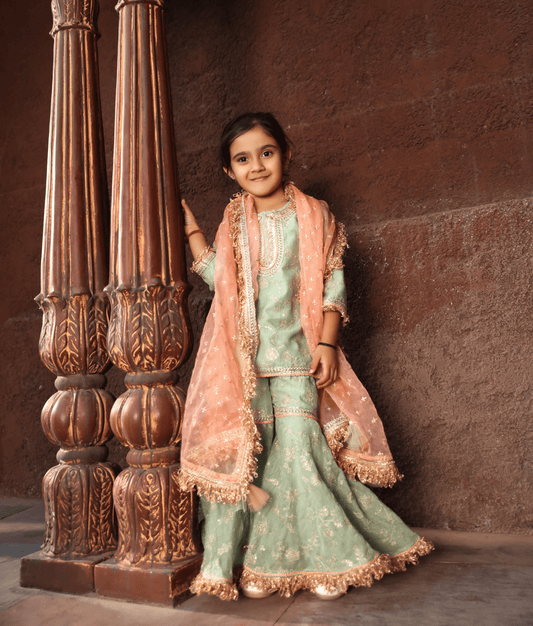


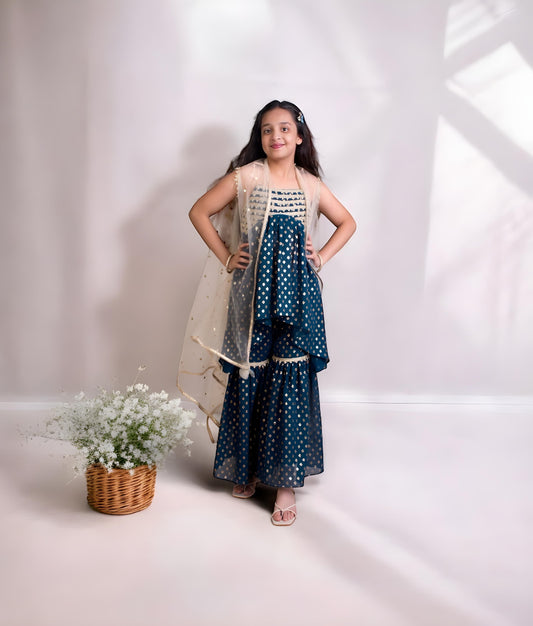

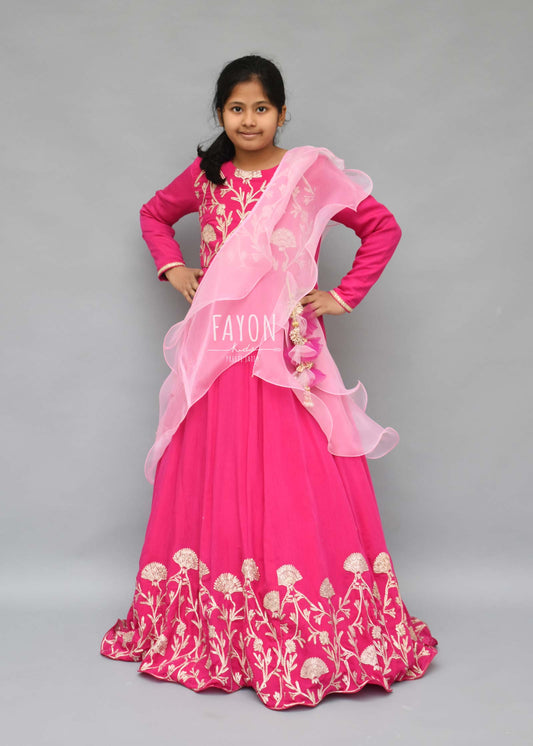


Traditional Dress for Girls: A Region-by-Region Buying Guide for 2026
Traditional dress for girls spans dozens of regional styles, fabrics, and occasions, making the buying decision genuinely complex. This guide cuts through the noise with concrete selection criteria, fabric comparisons, and style-by-occasion mapping so every purchase delivers both cultural authenticity and real wearability.
Understanding Regional Styles in Traditional Dress for Girls
India's Most Worn Traditional Silhouettes
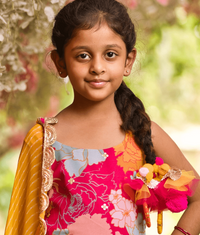
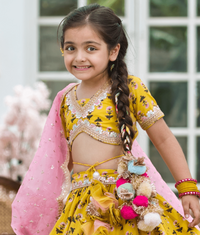
India alone offers several distinct silhouettes that dominate the traditional dress market for girls. The Gujarati chaniya choli, the Assamese mekhela chador, and the Bengali lehenga are among the most searched styles across major e-commerce platforms in 2025 and 2026. Each silhouette carries specific construction details, such as mirror-work on chaniya cholis or jamdani weave on Bengali sets, that directly affect both price and authenticity. When shopping for a birthday dress for girls, these regional silhouettes offer a culturally rich alternative to generic party styles.
Global Traditional Styles Worth Knowing
Beyond India, Mexican Poblana dresses and Japanese kimono-inspired sets for girls have seen strong cross-border demand on global marketplaces. Parents shopping for cultural events, school heritage days, or diaspora celebrations increasingly look for accurate regional detailing rather than generic "ethnic" prints. Knowing the origin of a style helps buyers evaluate whether a product is authentically constructed or simply pattern-printed on a basic silhouette.
|
Regional Style |
Key Design Feature |
Best Occasion |
Typical Price Range (INR) |
|
Gujarati Chaniya Choli |
Mirror embroidery, flared skirt |
Navratri, Garba events |
800 - 3,500 |
|
Assamese Bihu Dress |
Mekhela chador, gamosa motifs |
Bihu festival, school events |
600 - 2,800 |
|
Bengali Lehenga Set |
Jamdani or tant weave |
Durga Puja, family ceremonies |
900 - 4,000 |
|
Mexican Poblana Dress |
Embroidered floral skirt |
Heritage day, cultural shows |
1,200 - 5,000 |
Fabric and Construction: What Separates Quality from Compromise
Fabric Choices That Affect Comfort and Longevity
The fabric choice in a traditional dress for girls determines how long the garment lasts through multiple wears and washes. Pure cotton and cotton-silk blends remain the most practical for daytime ceremonies because they breathe well and resist shrinkage after hand washing. Heavier fabrics like brocade and raw silk are better reserved for evening events where the girl will be seated or photographed rather than running around. For cooler months, winter dresses for girls in heavier weaves like brocade or wool-blend fabrics offer both warmth and occasion-appropriate elegance.
Construction Details That Signal Authentic Craftsmanship
Flat-felled seams, reinforced waistbands, and hand-finished embroidery edges separate a well-made traditional dress from a fast-fashion replica. Buyers should check whether embellishments like sequins and mirrors are stitched or glued, because glued embellishments detach after the first wash. Fayonkids sources designer kids wear with attention to these finishing details, offering parents a curated range where construction quality is a baseline standard.
-
Cotton-silk blend: Best for all-day wear; resists wrinkling and suits most Indian climates.
-
Pure georgette: Lightweight and fluid, ideal for dance performances and Garba events.
-
Brocade: Rich texture suited to formal ceremonies; requires dry cleaning.
-
Chanderi: Sheer and elegant, best for older girls at evening functions.
-
Cotton lawn: Budget-friendly and breathable, suitable for school heritage days.
How to Size and Fit Traditional Dress for Girls Correctly
Why Standard Age Sizing Fails for Traditional Garments
Traditional dress for girls rarely follows the same sizing logic as Western casual wear, because ethnic silhouettes like lehengas and chaniya cholis are built around waist and chest measurements rather than age brackets. A girl aged seven can easily fall between two size categories depending on whether the brand uses Indian or international sizing charts. The safest buying approach is to measure chest circumference, waist, and skirt length before consulting any size guide. This is especially important when selecting a first birthday dress for baby girl, where fit and comfort are critical for a long celebration day.
-
Measure the child's chest at the fullest point with a soft tape, keeping one finger of slack.
-
Measure the natural waist, which sits just above the hip bone for most girls.
-
Measure from the waist to the desired hem length to confirm skirt sizing.
-
Cross-reference all three measurements against the brand's specific size chart, not a generic one.
-
If measurements fall between sizes, size up for comfort, especially for active events like Garba.
|
Age Group |
Recommended Fit Check |
Common Sizing Mistake |
|
2 to 4 years |
Chest + waist measurement |
Ordering by age label alone |
|
5 to 8 years |
Chest + skirt length |
Ignoring hem-to-floor measurement |
|
9 to 12 years |
All three measurements |
Using Western size charts for ethnic wear |
|
13 to 16 years |
Waist + hip + length |
Assuming teen sizing matches adult XS |
Where to Buy and What to Expect from a Premium Traditional Dress
Evaluating an Online Retailer Before You Buy
Not every platform selling traditional dress for girls offers the same product integrity, and price alone is a poor quality signal. Buyers should look for retailers that display fabric composition, care instructions, and region-of-origin details on each listing. Fayonkids positions itself as a designer kids wear destination where product detail, premium sourcing, and a broad range from infants to teen girls are combined in one curated store. For parents also exploring contemporary styles, the site's party wear western dresses collection complements its traditional range for mixed-occasion wardrobes.
-
Always check the fabric label before washing; brocade and raw silk require professional care.
-
Iron embroidered sections from the reverse side using a pressing cloth to protect mirror work.
-
Store with acid-free tissue paper between folds to prevent crease lines on delicate fabrics.
-
Inspect sequin and bead attachments after each wear and re-stitch any loose embellishments promptly.
Frequently Asked Questions
What is the most popular traditional dress for girls in India?
The chaniya choli from Gujarat and the lehenga choli worn across North India are consistently the most purchased traditional dress styles for girls at festivals and ceremonies.
How do I choose the right size for a traditional dress online?
Always measure chest, waist, and skirt length before consulting the brand's specific size chart, rather than relying on age-based sizing labels.
Which fabric is best for a traditional dress for girls at a long ceremony?
Cotton-silk blends are the most practical choice for long ceremonies because they breathe well, resist wrinkling, and remain comfortable across several hours of wear.
Can traditional dresses for girls be machine washed?
Most embroidered or embellished traditional dresses should be hand-washed in cold water or dry-cleaned; machine washing risks damaging mirror work, sequins, and delicate weaves.
Where can I buy premium traditional dress for girls online?
Fayonkids offers a curated range of designer kids ethnic and traditional wear for girls from infants through teens, with detailed size guides and premium fabric sourcing.