



-
Regular price Rs.5,649Sale price Rs.5,649 Regular priceUnit price per
Rs.5,730Ships in 2-3 days
Get it by Fri, Jul 24 – Sun, Jul 26
Sale -
Regular price Rs.5,186Sale price Rs.5,186 Regular priceUnit price per
Ships in 2-3 days
Get it by Fri, Jul 24 – Sun, Jul 26
-
Regular price Rs.6,889Sale price Rs.6,889 Regular priceUnit price per
Rs.6,889Ships in 2-3 days
Get it by Fri, Jul 24 – Sun, Jul 26
-
Regular price Rs.2,736Sale price Rs.2,736 Regular priceUnit price per
Rs.2,736Ships in 5-6 days
Get it by Sun, Jul 26 – Mon, Jul 27
-
Regular price Rs.2,100Sale price Rs.2,100 Regular priceUnit price per
Ships in 5-6 days
Get it by Sun, Jul 26 – Mon, Jul 27
-
Regular price Rs.4,268Sale price Rs.4,268 Regular priceUnit price per
Ships in 5-6 days
Get it by Sun, Jul 26 – Mon, Jul 27
-
Regular price Rs.3,004Sale price Rs.3,004 Regular priceUnit price per
Ships in 5-6 days
Get it by Sun, Jul 26 – Mon, Jul 27
-
Regular price Rs.3,004Sale price Rs.3,004 Regular priceUnit price per
Ships in 5-6 days
Get it by Sun, Jul 26 – Mon, Jul 27
-
Regular price Rs.18,802Sale price Rs.18,802 Regular priceUnit price per
Ships in 5-6 days
Get it by Sun, Jul 26 – Mon, Jul 27
-
Regular price Rs.12,525Sale price Rs.12,525 Regular priceUnit price per
Ships in 5-6 days
Get it by Sun, Jul 26 – Mon, Jul 27
-
Regular price Rs.4,977Sale price Rs.4,977 Regular priceUnit price per
Rs.7,310Ships in 5-6 days
Get it by Sun, Jul 26 – Mon, Jul 27
Sale -
Regular price Rs.3,004Sale price Rs.3,004 Regular priceUnit price per
Ships in 5-6 days
Get it by Sun, Jul 26 – Mon, Jul 27
-
Regular price Rs.5,186Sale price Rs.5,186 Regular priceUnit price per
Ships in 5-6 days
Get it by Sun, Jul 26 – Mon, Jul 27
-
Regular price Rs.1,802Sale price Rs.1,802 Regular priceUnit price per
Rs.3,004Ships in 5-6 days
Get it by Sun, Jul 26 – Mon, Jul 27
Sale -
Regular price Rs.2,704Sale price Rs.2,704 Regular priceUnit price per
Rs.2,736Ships in 5-6 days
Get it by Sun, Jul 26 – Mon, Jul 27
Sale -
Regular price Rs.2,736Sale price Rs.2,736 Regular priceUnit price per
Ships in 5-6 days
Get it by Sun, Jul 26 – Mon, Jul 27
-
Regular price Rs.3,004Sale price Rs.3,004 Regular priceUnit price per
Ships in 5-6 days
Get it by Sun, Jul 26 – Mon, Jul 27
-
Regular price Rs.3,004Sale price Rs.3,004 Regular priceUnit price per
Ships in 5-6 days
Get it by Sun, Jul 26 – Mon, Jul 27
-
Regular price Rs.19,335Sale price Rs.19,335 Regular priceUnit price per
Rs.20,251Ships in 5-6 days
Get it by Sun, Jul 26 – Mon, Jul 27
Sale -
Regular price Rs.12,960Sale price Rs.12,960 Regular priceUnit price per
Ships in 5-6 days
Get it by Sun, Jul 26 – Mon, Jul 27
-
Regular price Rs.6,116Sale price Rs.6,116 Regular priceUnit price per
Ships in 5-6 days
Get it by Sun, Jul 26 – Mon, Jul 27
-
Regular price Rs.6,116Sale price Rs.6,116 Regular priceUnit price per
Ships in 5-6 days
Get it by Sun, Jul 26 – Mon, Jul 27
-
Regular price Rs.4,743Sale price Rs.4,743 Regular priceUnit price per
Ships in 5-6 days
Get it by Sun, Jul 26 – Mon, Jul 27
-
Regular price Rs.5,311Sale price Rs.5,311 Regular priceUnit price per
Ships in 5-6 days
Get it by Sun, Jul 26 – Mon, Jul 27
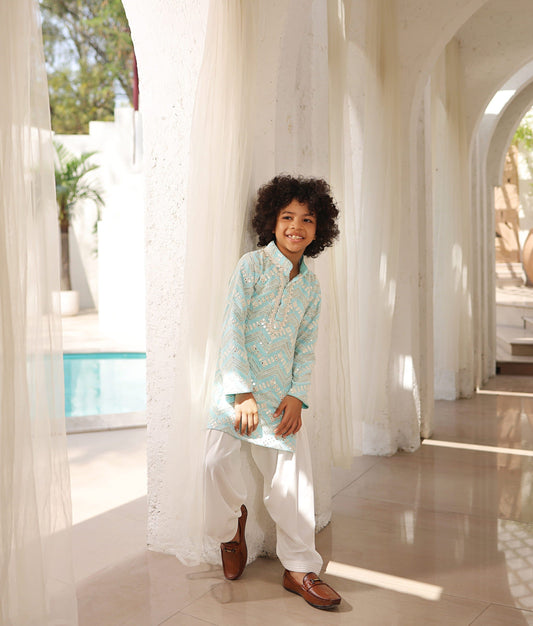

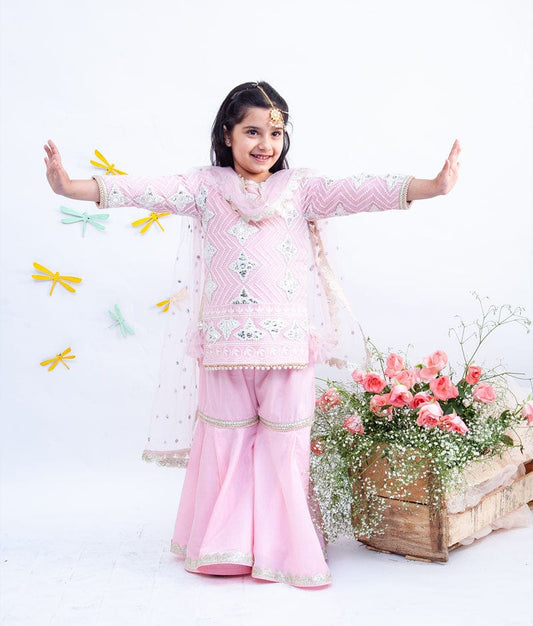

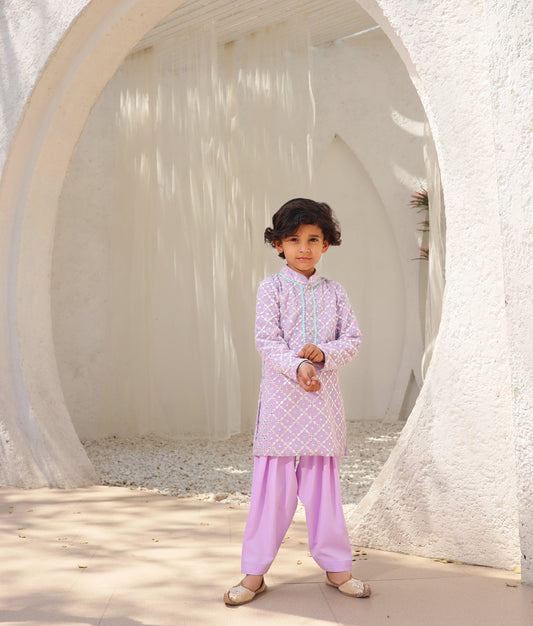

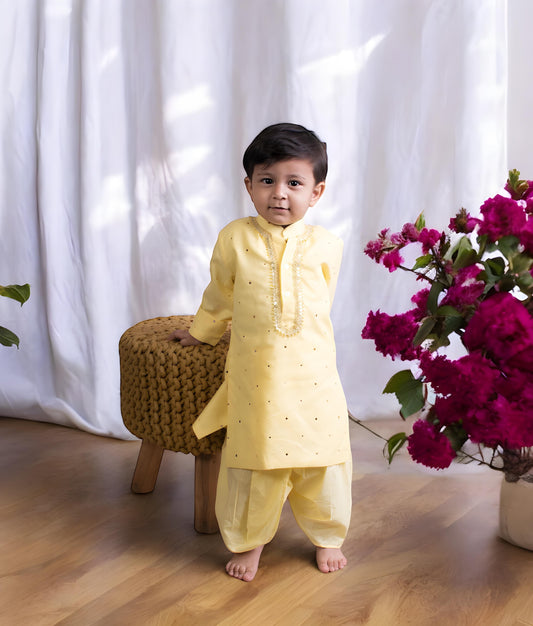

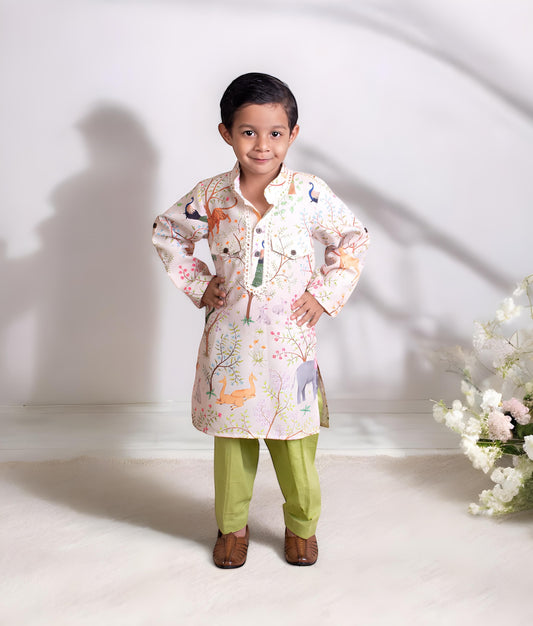

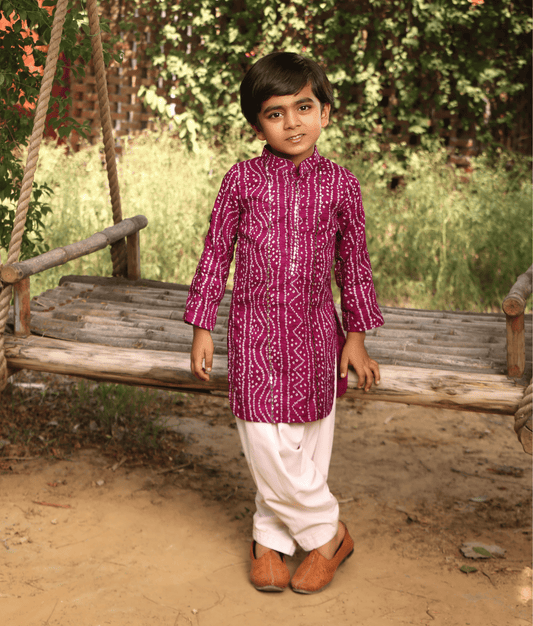


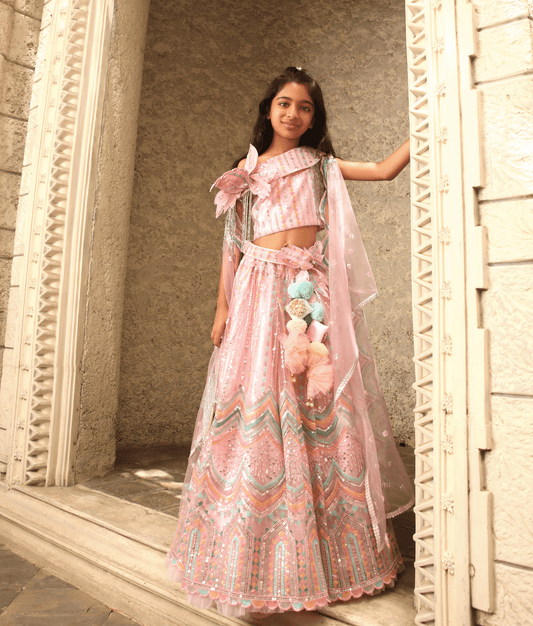

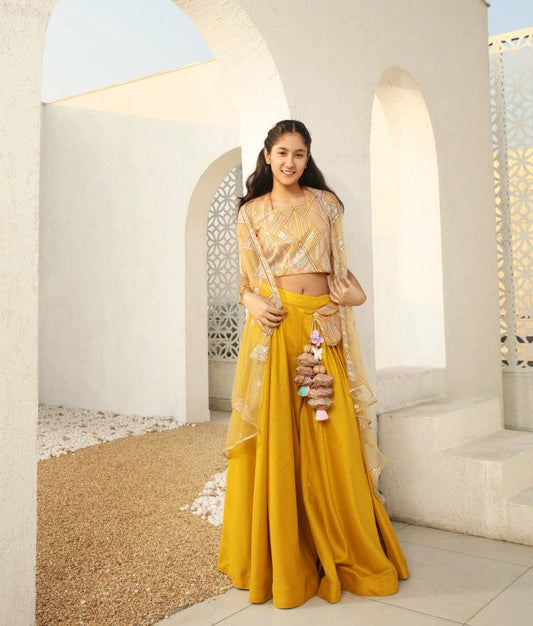

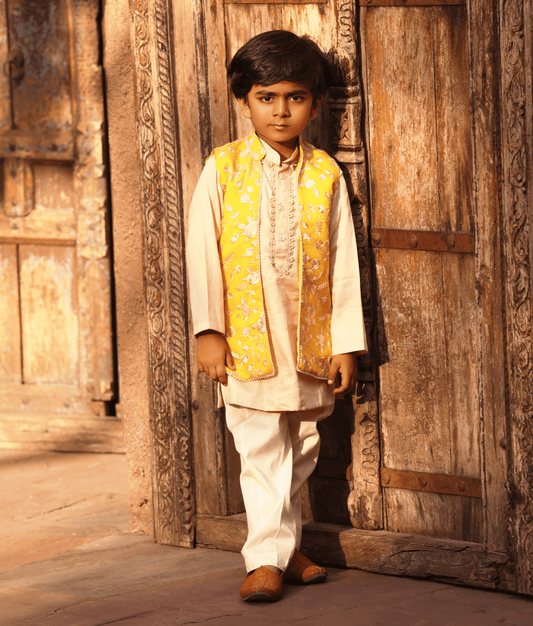


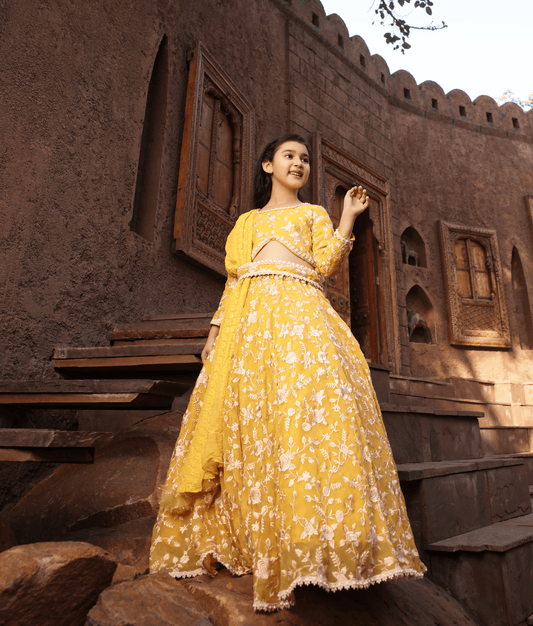


Twinning Outfits for Kids: Coordinated Looks for Every Celebration
Twinning outfits for kids are coordinated looks where two or more children dress in outfits that share a visual connection, whether through colour, fabric, embellishment, or design detail, without necessarily being identical. The term "twinning" has moved well beyond twins. Today it describes any intentional coordination between siblings, cousins, or friends at a shared celebration. In India, this idea fits naturally into a culture where family occasions are large, photographed carefully, and remembered for years. At Fayon Kids, twinning sets are custom-made to each child's individual measurements, so the coordination is built into the design from the start rather than forced through identical sizing.
What Does "Twinning" Actually Mean for Kids' Outfits?
The word twinning gets used in two different ways, and it is worth understanding which one applies to what you are planning.
The first meaning is literal: two children wearing genuinely identical outfits in the same colour, fabric, and design. This works best for actual twins who are close in size, or for very young children where the size difference is minimal.
The second meaning, and the far more common one in practice, is coordinated twinning: two children dressed in outfits that belong to the same visual family without being the same garment. This approach works for any age combination, any sibling pairing, and any occasion, because each child gets something designed for their specific proportions and personality.
|
Type |
What It Means |
Works Best For |
|
Identical Twinning |
Same colour, fabric, design, and silhouette |
Twins or children very close in age and size |
|
Coordinated Twinning |
Shared palette, complementary design, different silhouettes |
Siblings with an age or size difference |
|
Themed Twinning |
Shared motif or embellishment style, different colours |
Large groups, cousins, multi-family coordination |
Takeaway: Most families shopping for twinning outfits for kids are actually looking for coordinated twinning, which is more versatile, more flattering, and more visually interesting than identical dressing.
Why Are Twinning Outfits for Kids So Popular at Indian Celebrations?
India's celebration culture is built around family. Weddings, festivals, and milestone events bring together extended families across multiple generations, and the way children are dressed at these occasions is a reflection of the family's care, taste, and investment in the moment.
Twinning outfits sit at the centre of this because they make a visual statement about belonging. When siblings or cousins arrive at a wedding in coordinated outfits, they are read as a unit. The photographs tell a story. The visual memory of those children together, dressed in outfits that clearly belong to the same occasion and the same family, is one that stays long after the event itself.
Research across social media platforms consistently shows that family coordination posts, particularly sibling twinning looks at Indian weddings, generate significantly higher engagement than individual outfit posts. This is not just a vanity metric. It reflects a genuine emotional response to the idea of children dressed together with intention.
Beyond weddings, the biggest occasions for twinning outfits in India include:
- Diwali family gatherings
- Eid celebrations
- Navratri and Garba nights
- Raksha Bandhan
- First birthday parties
- School annual day functions
- Family portrait sessions
Our kids' ethnic wear collection is built around exactly these occasions, with coordinated, ready styles for both boys and girls across different age groups.
Takeaway: Twinning outfits for kids are popular at Indian celebrations because they communicate family togetherness visually, and that visual communication is something Indian families have always valued at significant occasions.
What Are the Best Twinning Outfit Combinations for Kids?
Sister and Sister Twinning Looks
Two sisters twinning is perhaps the easiest coordination to achieve because both children are wearing the same clothing category. A lehenga for each sister in different but complementary tones, a pair of anarkali suits in the same fabric with different border colours, or matching gowns in tonal shades all work well.
The most effective sister twinning looks avoid making both outfits identical. Instead, they use one design element, such as the border embroidery pattern, the blouse fabric, or the dupatta colour, as the connecting thread while allowing the dominant colour or silhouette to vary slightly between the two children.
Brother and Brother Twinning Looks
Brothers twinning offers strong results when the coordination happens through fabric and embellishment rather than just colour. Two brothers in sherwanis of the same fabric but in different tones, or matching kurta sets with the same embroidery border in two colour stories, look considered and purposeful.
For more formal occasions such as receptions or black-tie adjacent events, our coat pant for kids collection offers structured options that create a sharp twinning effect for brothers attending the same event.
Brother and Sister Twinning Looks
This is the most design-intensive combination and the one that most parents find hardest to navigate with ready-made options. The silhouettes are entirely different, so the coordination has to come through colour, fabric, or embellishment detail.
A girl in a deep teal embroidered lehenga and a boy in a teal and ivory sherwani with matching embroidery on the collar is a classic example. The colour anchors them together. The shared embroidery detail makes the connection feel designed rather than accidental.
Cousins and Group Twinning
Large family events often involve multiple children from different families who need to look connected without necessarily wearing identical outfits. Themed twinning works well for this scenario: all the children wear outfits from the same colour family or with the same embellishment motif, regardless of the silhouette or exact shade.
For girls in a group twinning scenario, our kids' wedding dresses collection offers enough variety within consistent quality and design standards that multiple outfits can be chosen from the same collection and read naturally as a group.
Takeaway: The best twinning outfit combination for any group of children is the one where coordination is achieved through a shared design element rather than through forcing identical clothing onto children with different needs.
How Do You Build a Twinning Outfit Set Step by Step?
Most parents approach twinning outfit shopping without a clear framework, which leads to last-minute decisions that do not quite come together. Here is a process that consistently works.
Step 1: Define the Occasion and Formality Level
Before any design decision is made, the occasion determines the formality level, fabric category, and silhouette range you are working within. A Diwali gathering calls for something different from a wedding reception, and a first birthday party is different again. Starting with the occasion prevents the common mistake of overdressing or underdressing children for the specific event.
Step 2: Count the Children and Note the Age Range
The number of children and their age range directly affect how you approach the coordination. Two children of similar age can carry more identical design details. A group spanning toddlers to tweens needs more flexibility in the coordination approach because what works on a three-year-old silhouette does not automatically work on a twelve-year-old's.
Step 3: Choose a Two-Colour Palette
Two colours work better than three for twinning outfits. Choose one dominant and one accent. The dominant colour becomes the primary colour of one child's outfit and the accent of the other's, and vice versa. This creates a mirror effect that is immediately readable as intentional coordination.
|
Color Combination |
Occasion Fit |
Why It Photographs Well |
|
Gold and Ivory |
Wedding ceremony, reception |
High contrast, timeless, warm |
|
Emerald and Blush |
Festive, semi-formal |
Complementary without competing |
|
Burgundy and Champagne |
Winter weddings, Diwali |
Rich and warm, seasonal |
|
Powder Blue and White |
Eid, summer occasions |
Clean, fresh, light-filled |
|
Mustard and Rust |
Navratri, Mehendi |
Vibrant, earthy, festive |
|
Navy and Silver |
Formal reception, party |
Sharp, classic, versatile |
Step 4: Choose One Shared Design Detail
This is the step that separates a genuinely twinning set from two outfits that happen to share a colour. A shared design detail can be an embroidery motif that appears on the border of both outfits, the same fabric used as an accent in both pieces, the same button or closure style, or a shared lining fabric. This detail does not need to be prominent. In fact, the more subtle it is, the more designed the overall look feels.
Step 5: Measure Each Child Separately
No two children are built the same way, even within the same family. Custom measurement for each child ensures that the outfit is proportionate to their specific body, which is where the difference between a good twinning look and a great one is most visible in photographs.
For boys, our kids' party wear dress for boys collection shows the level of design and tailoring detail that goes into occasion wear for children, which sets the standard for what custom twinning sets look like in practice.
Takeaway: Building a twinning outfit set step by step, starting with the occasion and ending with individual measurements, produces a result that looks designed rather than assembled.
What Fabrics Work Best for Twinning Outfits Across Different Seasons?
Fabric is the most practical element of any twinning outfit decision and the one most frequently underweighted in favour of colour and design. The wrong fabric choice creates discomfort for children across long events and can make even the most beautifully designed outfit look wrong in photographs.
Summer and Warm Weather Occasions (March to September)
Lightweight, breathable fabrics are essential for outdoor or warm-venue events. Chanderi, georgette, cotton silk, and light organza all work well. These fabrics drape naturally on children's bodies, move freely during activity, and do not retain heat the way heavier materials do.
Winter and Cooler Weather Occasions (October to February)
This is the peak wedding and celebration season in India, and it calls for richer fabrics. Raw silk, dupion silk, Banarasi weaves, and velvet for boys' outerwear all perform well in cooler temperatures. These fabrics carry heavier embellishment naturally and photograph with a depth that lighter fabrics cannot always achieve.
Indoor Versus Outdoor Venues
A banquet hall with air conditioning in July is not the same as an outdoor lawn in January, even if both are formal occasions. Indoor summer venues allow for slightly heavier fabrics than outdoor summer events would. This distinction is worth considering when you are choosing between two fabric options.
|
Season and Venue |
Recommended Fabrics |
What to Avoid |
|
Summer, outdoor |
Chanderi, georgette, light cotton silk |
Velvet, heavy brocade, thick silk |
|
Summer, indoor AC |
Georgette, light raw silk, organza |
Velvet, thick brocade |
|
Winter, outdoor |
Dupion silk, raw silk, Banarasi, velvet |
Very light georgette |
|
Winter, indoor |
All silk types, light velvet, Banarasi |
Heavy outdoor-only fabrics |
|
Monsoon, indoor |
Synthetic blends, georgette, art silk |
Pure cotton (absorbs moisture) |
Takeaway: Choosing the right fabric for a twinning outfit is as important as choosing the right colour, because comfort over a long event directly affects how the children look and feel throughout the day.
How Does Custom-Made Tailoring Improve Twinning Outfit Results?
The single most visible difference between a custom-made twinning set and a ready-made alternative is fit. In a twinning context, fit becomes doubly important because both children are being viewed together. A well-fitted outfit on one child and a slightly off-fitted outfit on the other immediately draws attention to the discrepancy rather than the coordination.
Custom-made twinning sets resolve this because each outfit is built from the beginning for that specific child. The shoulders sit where they should. The hem falls at the right length. The embellishment is placed in proportion to the child's frame rather than positioned for a generic size.
Beyond fit, custom-made twinning sets allow the coordination to be designed across both outfits simultaneously. The design team can ensure that the embroidery motif on the girl's lehenga border reappears on the boy's sherwani collar. The dupatta fabric can be used as the lining of the boy's stole. These deliberate connections are invisible in ready-made options and central to what makes a custom twinning set look genuinely designed.
Takeaway: Custom-made tailoring produces twinning results that are visually stronger, photographically more compelling, and practically more comfortable than standard ready-made alternatives because the fit and coordination are both built in from the start.
Frequently Asked Questions
Q1: What is the difference between twinning outfits and matching outfits for kids?
Twinning outfits refer to a broader category of coordinated dressing where children look visually connected through shared color, fabric, or design detail, without necessarily wearing identical garments. Matching outfits, in the stricter sense, implies identical clothing. For most sibling and cousin combinations, twinning through coordination produces a more sophisticated and age-appropriate result than strict matching.
Q2: Do twinning outfits work for cousins and not just siblings?
Yes. Twinning outfits work equally well for cousins, especially at large family occasions like Indian weddings where multiple children from different branches of the family attend together. Themed twinning, where all the children share a color palette or embellishment motif without wearing identical outfits, is the most practical approach for larger groups.
Q3: How do I twin a toddler with an older child without one outfit looking out of place?
The key is to let the design elements do the twinning rather than the silhouette. A toddler in a lightweight lehenga and a ten-year-old in a more structured version of the same design can look beautifully twinned when the color and border embroidery are consistent across both. The silhouette and construction complexity can differ significantly without breaking the coordination.
Q4: Can twinning outfits be ordered for a group of five or six children?
Yes. Group twinning orders for larger families or wedding parties involving multiple children are something Fayon Kids handles. For groups of five or six, themed twinning through a shared color palette tends to work better than identical design, because it allows each child's outfit to be appropriate for their specific age and silhouette while still reading as a cohesive group.
Q5: What is the best way to start a twinning outfit order for a specific upcoming occasion?
Begin by reaching out to the Fayon Kids team with the occasion date, the number of children, each child's age and measurements, a color direction or palette you are considering, and any reference images you have found. We recommend starting this process at least four to six weeks before the event, and six to eight weeks for international orders, to allow sufficient time for design, tailoring, and delivery.