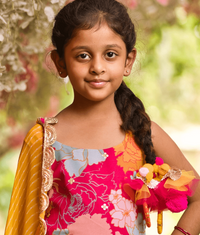
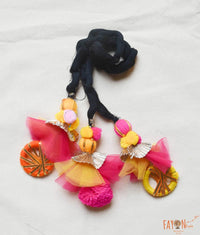


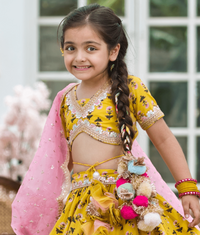
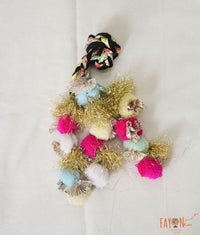
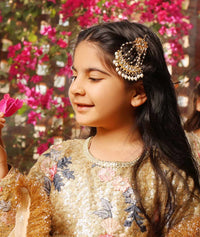
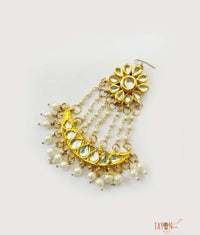


-
Regular price Rs.11,106Sale price Rs.11,106 Regular priceUnit price per
Ships in 5-6 days.
Get it by Thu, Sep 10 – Fri, Sep 11
-
Regular price Rs.6,384Sale price Rs.6,384 Regular priceUnit price per
Ships in 5-6 days.
Get it by Thu, Sep 10 – Fri, Sep 11
-
Regular price Rs.5,186Sale price Rs.5,186 Regular priceUnit price per
Ships in 5-6 days.
Get it by Thu, Sep 10 – Fri, Sep 11
-
Regular price Rs.3,756Sale price Rs.3,756 Regular priceUnit price per
Ships in 5-6 days.
Get it by Thu, Sep 10 – Fri, Sep 11
-
Regular price Rs.10,545Sale price Rs.10,545 Regular priceUnit price per
Ships in 5-6 days.
Get it by Thu, Sep 10 – Fri, Sep 11
-
Regular price Rs.5,186Sale price Rs.5,186 Regular priceUnit price per
Ships in 5-6 days.
Get it by Thu, Sep 10 – Fri, Sep 11
-
Regular price Rs.14,698Sale price Rs.14,698 Regular priceUnit price per
Ships in 5-6 days.
Get it by Thu, Sep 10 – Fri, Sep 11
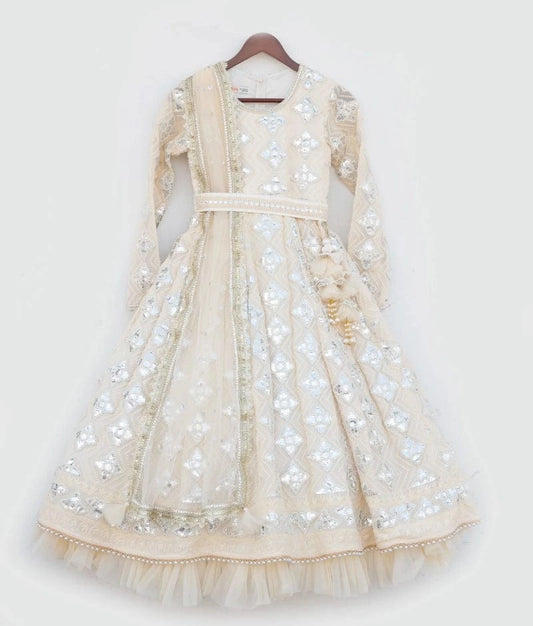
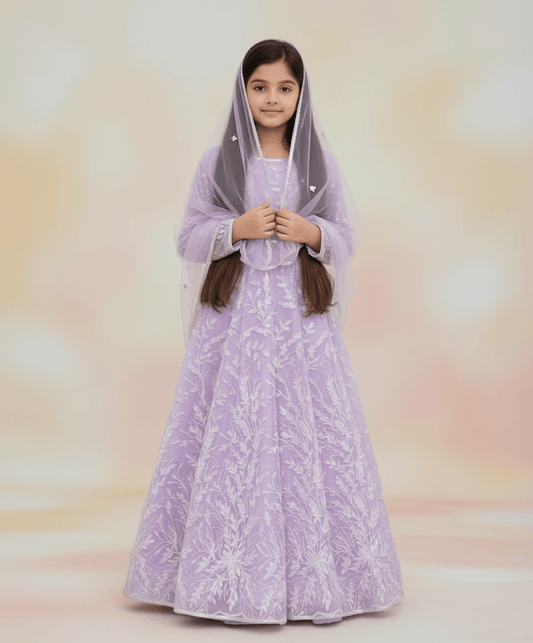






Anarkali Dress for Girls: The Royal Legacy That Belongs in Every Girl's Ethnic Wardrobe
The name itself carries history. Anarkali, whose story has been told and retold across centuries of Mughal legend, was said to be a court dancer in the reign of Emperor Akbar, celebrated for the swirling, dramatic movement of her garments as she danced. Whether the historical Anarkali existed exactly as legend describes her is debated by historians. What is undeniable is that the garment named after her, the Anarkali dress, is one of the most enduring and beloved silhouettes in Indian ethnic wear.
For girls, the Anarkali dress offers something that few other ethnic garments can match: it is simultaneously deeply traditional and completely contemporary, modest and dramatic, comfortable and visually stunning. It is the garment that photographs as beautifully at a family puja as it does at a wedding, as a festive gathering as at a school cultural event. It is, quite simply, one of the most versatile pieces in Indian children's ethnic wear.
The History of the Anarkali Silhouette
The Anarkali silhouette, characterised by a fitted bodice that flares out into a dramatic floor-length or knee-length skirt, has its roots in the Mughal courts of sixteenth and seventeenth-century India. The garments worn by court dancers and noblewomen of this era featured exactly this combination: a fitted upper body that emphasised the torso and a dramatically flared lower half that moved beautifully with the body and created visual spectacle in performance and in portraiture.
The contemporary Anarkali dress is a descendant of these Mughal court garments. In its modern form, it is typically a long or floor-length kurta (or dress-style garment) with a fitted or slightly fitted bodice and a dramatically flared hem. It is worn over churidar, leggings, or palazzo-style pants, with a dupatta completing the ensemble.
For children, the Anarkali has been adapted to be age-appropriate, comfortable, and easy to move in while retaining the dramatic silhouette and celebratory quality of the original form.
Why the Anarkali Works So Well for Girls
The Anarkali silhouette has several qualities that make it particularly well-suited to children's wear.
First, the flared hem is exceptionally forgiving of different body types. Unlike a sharara or a fitted lehenga skirt, which require more precise sizing to look their best, an Anarkali dress looks beautiful on girls of all shapes and proportions. The flare creates the impression of length and elegance regardless of the child's height or build.
Second, the Anarkali is inherently comfortable. The fitted bodice provides structure without restriction, and the flared lower half gives the child complete freedom of movement. Girls can run, dance, and play in an Anarkali without the fabric working against them, which is not always true of more structured ethnic garments.
Third, the Anarkali is an inherently complete garment. Unlike a lehenga (which requires a choli, skirt, and dupatta to be considered dressed) or a sharara set (which requires a top and bottom at minimum), an Anarkali dress is a single piece that creates a full look on its own. This makes it significantly easier to dress a child in and much more practical for events where multiple costume changes are unlikely.
The Different Styles of Anarkali Dresses for Girls
The Floor-Length Anarkali
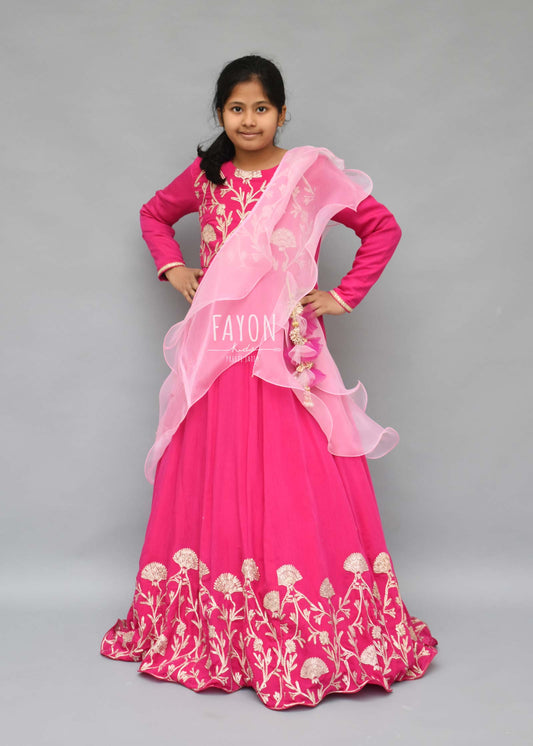
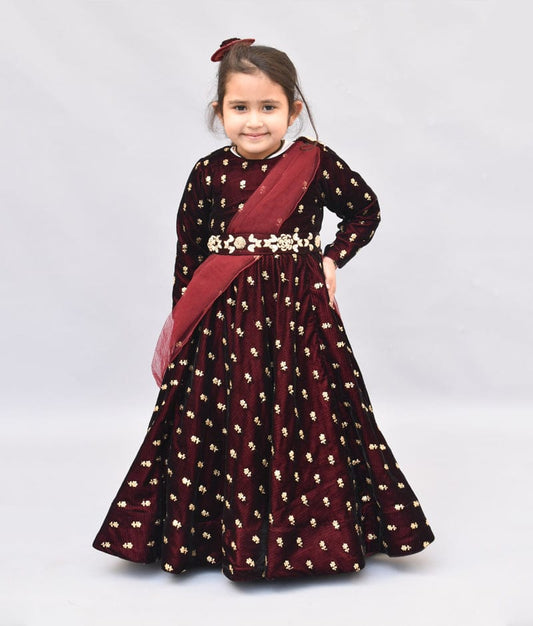
The most formal and dramatic version of the silhouette, the floor-length Anarkali is appropriate for weddings, formal family functions, and any occasion where a child needs to look genuinely dressed up. In a rich fabric like silk, velvet, or embroidered georgette, a floor-length Anarkali for girls rivals the formal impact of a lehenga while being considerably more comfortable.
The Knee-Length Anarkali
A shorter, more versatile version that works for a wider range of occasions. The knee-length Anarkali is appropriate for semi-formal events, school cultural functions, festive gatherings, and family occasions. It is also more practical for younger girls who need freedom of movement.
The Jacket-Style Anarkali
A contemporary variation that adds a structured jacket or shrug over the base Anarkali dress, creating a layered look that feels fashion-forward while remaining ethnically grounded. This is particularly popular for older girls who want something that feels more styled and individual.
The Printed Anarkali
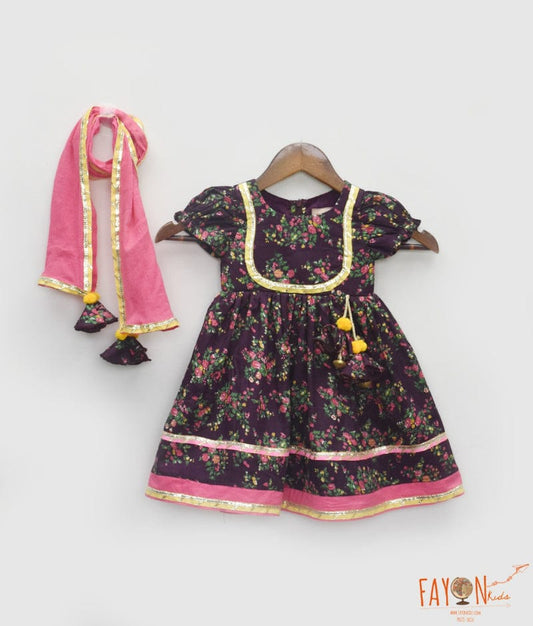
Rather than embroidery or embellishment, a printed Anarkali uses a bold, beautiful fabric print as its primary design statement. Floral prints, block prints, and Kalamkari-inspired designs are all popular in this category. Printed Anarkalis are typically more casual than embellished versions and are ideal for daytime functions and festive occasions that do not require the most formal dress.
The Embellished Festive Anarkali
The most celebratory version of the silhouette, featuring rich embroidery, mirror work, gota patti, or zari embellishment. This is the Anarkali you choose for a wedding, a big puja, or any occasion where the goal is to look unforgettable.
For girls who love the Anarkali silhouette alongside other ethnic options, the Girls Lehenga Collection offers a complementary range of ethnic festive options in equally celebratory styles.
Fabric Choices for Girls' Anarkali Dresses
Georgette is the most common and most versatile fabric for Anarkali dresses across all age groups. It is breathable, falls beautifully, carries embroidery and print with equal grace, and is comfortable for extended wear. A georgette Anarkali in a rich colour with moderate embellishment is an excellent all-purpose festive choice for girls of any age.
Silk creates the most luxurious version of the Anarkali silhouette. Silk Anarkalis for girls are typically reserved for the most formal occasions and winter events, where the fabric's warmth is an advantage rather than a drawback.
Cotton in a good weight is an underused fabric for Anarkali dresses and a genuinely excellent choice for daytime events and outdoor functions. A block-printed or embroidered cotton Anarkali is as beautiful as a more elaborate piece while being significantly more comfortable in warm weather.
Chanderi combines the lightness of cotton with the lustre of silk, making it an excellent choice for Anarkali dresses that need to look luxurious while remaining comfortable. Chanderi Anarkalis in soft, muted colours are particularly beautiful. For girls who love the Chanderi aesthetic, the Girls Sharara Collection includes Chanderi options in sharara format that complement the Anarkali wardrobe beautifully.
Colour and Embellishment Guide for Girls' Anarkali Dresses
The Anarkali silhouette works in virtually every colour palette available in Indian ethnic wear, which is one of its great strengths.
For weddings and formal functions, choose deep, rich colours: navy, emerald, burgundy, deep rose, or royal blue. These colours photograph beautifully in the warm indoor lighting typical of Indian wedding venues and convey the formality appropriate to the occasion.
For festive occasions like Diwali and Navratri, brighter, more vibrant colours are appropriate: fuchsia, turquoise, orange, and red all work beautifully. Paired with gold or silver embellishment, these colours create the kind of visually joyful look that festive celebrations call for.
For daytime events and school functions, softer, more muted colours are preferable: mint, blush, powder blue, and ivory all work well. A printed Anarkali in a gentle floral or geometric pattern is ideal for these occasions.
For the most formal occasions, particularly where a girl will be photographed extensively, metallic embellishment (gold zari, silver thread work, mirror embroidery) adds a luminous quality to any Anarkali dress that performs exceptionally well in photographs.
Styling an Anarkali Dress: Completing the Look
The Anarkali dress is a complete look in itself, which means styling it requires a lighter touch than assembling a multi-piece ethnic ensemble.
Dupatta: A matching or contrasting dupatta completes the formal Anarkali look. For younger girls, a dupatta can be kept simpler and shorter to avoid it becoming an encumbrance during play. For older girls, a full-length dupatta draped over one shoulder adds elegance and cultural completeness.
Footwear: Juttis are the most appropriate and visually harmonious footwear choice for an Anarkali dress. A pair of juttis in a colour that picks up the embroidery or dupatta colour of the Anarkali creates a fully considered ethnic look.
Hair: An Anarkali looks beautiful with hair worn in either a neat braid or a loose, slightly styled open style. For very formal occasions, a bun or chignon (for older girls) with a simple tikka or hair accessory adds a touch of formality.
Accessories: Keep jewellery simple and age-appropriate. Small earrings and a single bangle or bracelet are sufficient for most occasions. Avoid overloading accessories on a look that is already visually complete in its garment.
For boys at the same events, the Safa Pagdi Collection at Fayon Kids completes the ethnic look for brothers with headwear that matches the cultural significance of the Anarkali.
The Anarkali as a Timeless Investment in Your Daughter's Wardrobe
Unlike trend-driven pieces that feel dated within a season, the Anarkali dress has a timelessness rooted in its historical depth. A well-made Anarkali in a classic colour and quality fabric will look as beautiful in photographs taken ten years from now as it does today.
For parents who want to build an ethnic wardrobe for their daughters that truly lasts, the Anarkali is an essential inclusion. It bridges the gap between the most casual ethnic wear and the most formal pieces, offers extraordinary versatility across occasions and seasons, and carries a cultural heritage that connects every girl who wears it to one of the most rich and fascinating traditions in Indian fashion history.
FAQs
Q1. What age group suits the Anarkali dress best?
It works for nearly all ages; the flared silhouette is forgiving and comfortable for younger and older girls alike.
Q2. What's the difference between a floor-length and knee-length Anarkali?
Floor-length is more formal and dramatic, while knee-length is more versatile and practical for movement.
Q3. Which fabric is best for an Anarkali in warm weather?
Cotton or Chanderi, both breathable and comfortable for daytime or outdoor events.
Q4. Does an Anarkali need a dupatta to look complete?
It helps complete the formal look, though younger girls can wear a shorter, simpler one for ease.
Q5. What colours suit an Anarkali for festive occasions like Diwali?
Vibrant shades like fuchsia, turquoise, and orange paired with gold or silver embellishment.
Q6. What footwear pairs best with an Anarkali dress?
Juttis in a colour that echoes the embroidery or dupatta create the most harmonious look.