

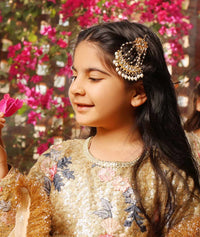
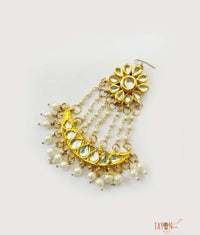


-
Regular price Rs.2,950Sale price Rs.2,950 Regular priceUnit price per
Ships in 5-6 days.
Get it by Thu, Sep 10 – Fri, Sep 11
-
Regular price Rs.2,736Sale price Rs.2,736 Regular priceUnit price per
Ships in 5-6 days.
Get it by Thu, Sep 10 – Fri, Sep 11
-
Regular price Rs.1,950Sale price Rs.1,950 Regular priceUnit price per
Rs.1,950Ships in 5-6 days.
Get it by Thu, Sep 10 – Fri, Sep 11
-
Regular price Rs.11,588Sale price Rs.11,588 Regular priceUnit price per
Ships in 5-6 days.
Get it by Thu, Sep 10 – Fri, Sep 11
-
Regular price Rs.2,950Sale price Rs.2,950 Regular priceUnit price per
Ships in 5-6 days.
Get it by Thu, Sep 10 – Fri, Sep 11
-
Regular price Rs.9,609Sale price Rs.9,609 Regular priceUnit price per
Ships in 5-6 days.
Get it by Thu, Sep 10 – Fri, Sep 11
-
Regular price Rs.2,950Sale price Rs.2,950 Regular priceUnit price per
Ships in 5-6 days.
Get it by Thu, Sep 10 – Fri, Sep 11
-
Regular price Rs.2,940Sale price Rs.2,940 Regular priceUnit price per
Ships in 5-6 days.
Get it by Thu, Sep 10 – Fri, Sep 11
-
Regular price Rs.2,069Sale price Rs.2,069 Regular priceUnit price per
Rs.3,448Ships in 5-6 days.
Get it by Thu, Sep 10 – Fri, Sep 11
Sale -
Regular price Rs.3,767Sale price Rs.3,767 Regular priceUnit price per
Rs.3,863Ships in 5-6 days.
Get it by Thu, Sep 10 – Fri, Sep 11
Sale -
Regular price Rs.3,737Sale price Rs.3,737 Regular priceUnit price per
Ships in 5-6 days.
Get it by Thu, Sep 10 – Fri, Sep 11
-
Regular price Rs.5,263Sale price Rs.5,263 Regular priceUnit price per
Ships in 5-6 days.
Get it by Thu, Sep 10 – Fri, Sep 11
-
Regular price Rs.8,160Sale price Rs.8,160 Regular priceUnit price per
Ships in 5-6 days.
Get it by Thu, Sep 10 – Fri, Sep 11
-
Regular price Rs.7,156Sale price Rs.7,156 Regular priceUnit price per
Ships in 5-6 days.
Get it by Thu, Sep 10 – Fri, Sep 11
-
Regular price Rs.4,500Sale price Rs.4,500 Regular priceUnit price per
Ships in 5-6 days.
Get it by Thu, Sep 10 – Fri, Sep 11
-
Regular price Rs.3,300Sale price Rs.3,300 Regular priceUnit price per
Ships in 5-6 days.
Get it by Thu, Sep 10 – Fri, Sep 11
-
Regular price Rs.4,238Sale price Rs.4,238 Regular priceUnit price per
Ships in 5-6 days.
Get it by Thu, Sep 10 – Fri, Sep 11
-
Regular price Rs.2,704Sale price Rs.2,704 Regular priceUnit price per
Rs.2,736Ships in 5-6 days.
Get it by Thu, Sep 10 – Fri, Sep 11
Sale -
Regular price Rs.8,643Sale price Rs.8,643 Regular priceUnit price per
Ships in 5-6 days.
Get it by Thu, Sep 10 – Fri, Sep 11
-
Regular price Rs.7,050Sale price Rs.7,050 Regular priceUnit price per
Ships in 5-6 days.
Get it by Thu, Sep 10 – Fri, Sep 11
-
Regular price Rs.4,153Sale price Rs.4,153 Regular priceUnit price per
Ships in 2-3 days.
Get it by Tue, Sep 08 – Thu, Sep 10
-
Regular price Rs.3,303Sale price Rs.3,303 Regular priceUnit price per
Ships in 5-6 days.
Get it by Thu, Sep 10 – Fri, Sep 11
-
Regular price Rs.16,871Sale price Rs.16,871 Regular priceUnit price per
Ships in 5-6 days.
Get it by Thu, Sep 10 – Fri, Sep 11
-
Regular price Rs.8,662Sale price Rs.8,662 Regular priceUnit price per
Ships in 5-6 days.
Get it by Thu, Sep 10 – Fri, Sep 11













Designer Ethnic Wear for Kids: Why Quality, Craft, and Cultural Intention Matter More Than Ever
There is a moment that happens at nearly every Indian wedding or festive gathering. A child walks in wearing something genuinely beautiful, something clearly made with attention and care, and the room notices. Not because the child is doing anything remarkable, but because the garment is doing its job: announcing that this occasion matters, that this child was dressed with intention, and that the family behind the choice understands the difference between clothing and dressing.
That difference is what designer ethnic wear for kids is about. It is not about spending more for the sake of spending more. It is about understanding that the clothes children wear to the most significant moments of their childhood become part of how those moments are remembered, photographed, and passed down through family stories. A beautifully made lehenga, a precisely constructed sherwani, a sharara set in quality fabric with secure embellishment: these are not simply garments. They are the visual evidence of a celebration taken seriously.
This guide makes the case for designer ethnic wear for kids, explains what separates it from mass-market alternatives, and provides the knowledge needed to choose the right pieces for every child and every occasion.
What Makes Ethnic Wear "Designer" for Children
The word designer is used loosely in the children's wear market, and understanding what it actually means in the context of kids' ethnic wear helps parents shop with clarity.
Genuinely designed ethnic wear for children is characterised by four qualities that mass-market alternatives consistently lack.
Intentional Silhouette Construction
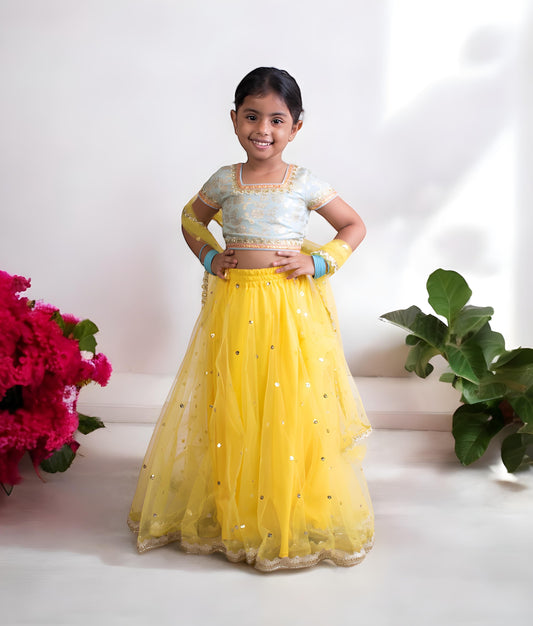
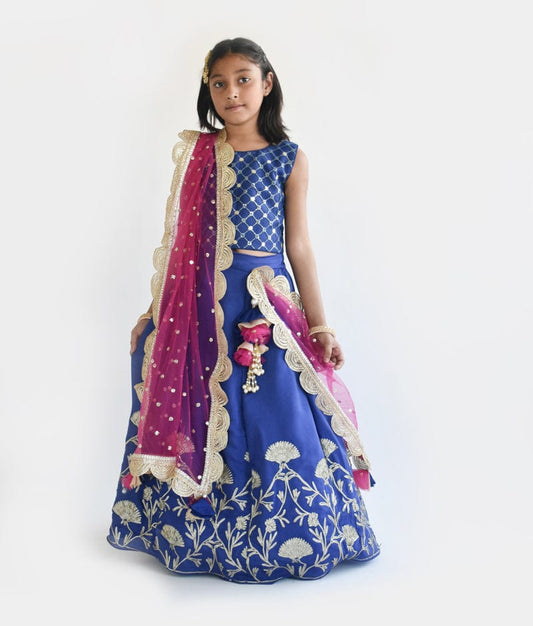
A designer ethnic piece for children is cut and constructed with the specific proportions of a child's body in mind, not simply scaled down from an adult garment. The choli of a lehenga designed for a seven-year-old should be built around a seven-year-old's chest, shoulder width, and arm length, not around a scaled proportion of an adult bodice. The skirt of a designer lehenga should be cut with the right hem length and flare angle for the child's height, so it falls correctly and moves beautifully rather than dragging or bunching.
This level of construction is visible in how the finished garment sits on a child's body. A well-proportioned designer lehenga looks like it was made for that child. A scaled-down adult pattern looks like a garment a child is wearing, not one built for them.
Quality Fabric Selection
Designer ethnic wear for children uses fabrics chosen for their specific properties: how they drape, how they hold embellishment, how they breathe, how they photograph, and how they feel against a child's skin. Mass-market alternatives default to the cheapest available fabric in each category, which typically means heavily synthetic materials that look acceptable in product photographs but feel uncomfortable in wear and do not age well through a celebration day.
Quality fabric in a children's ethnic piece means georgette with a real drape, silk with a genuine lustre, Chanderi with the characteristic light shimmer that cannot be replicated in synthetic alternatives, or velvet with the depth and richness that only a quality pile fabric achieves.
Embellishment That Lasts
The embellishment on a designer ethnic piece for children is applied with techniques that ensure it survives not only the event but the washing and storage that follow. Hand-applied gota patti is stitched rather than glued. Sequence embroidery is anchored at multiple points rather than strung loosely on a single thread. Mirror work is encased in fabric borders rather than simply adhered to the surface.
The test is simple: quality embellishment looks the same at the end of a six-hour wedding as it does at the beginning. Mass-market embellishment frequently does not.
Thoughtful Finishing
The finishing of a garment tells you everything about the care invested in its construction. Interior seams in a quality ethnic piece are finished and smooth, not raw and scratchy. Linings are soft and complete, extending to every part of the garment that touches skin. Closures work smoothly and repeatedly, not just for the first wearing. Embellishment placement is considered and consistent, not random or uneven.
The Designer Ethnic Wear Categories: What to Look For in Each
Designer Lehengas for Girls
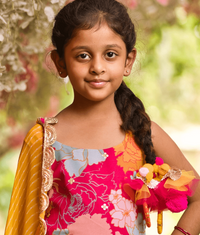
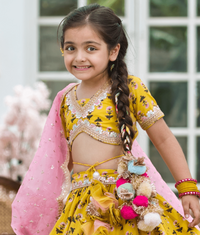
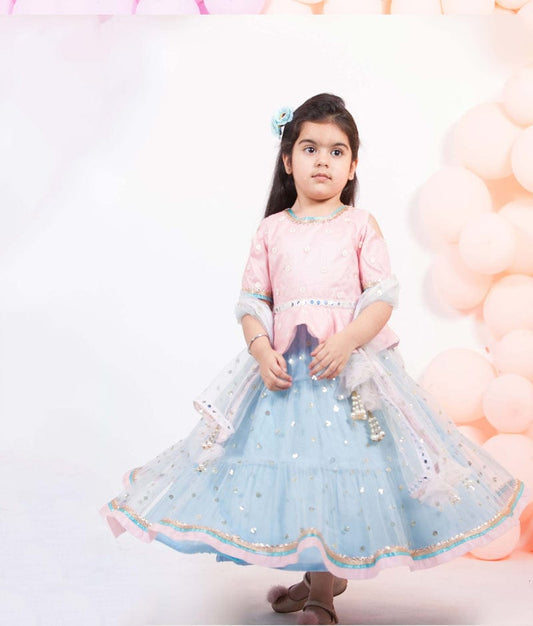
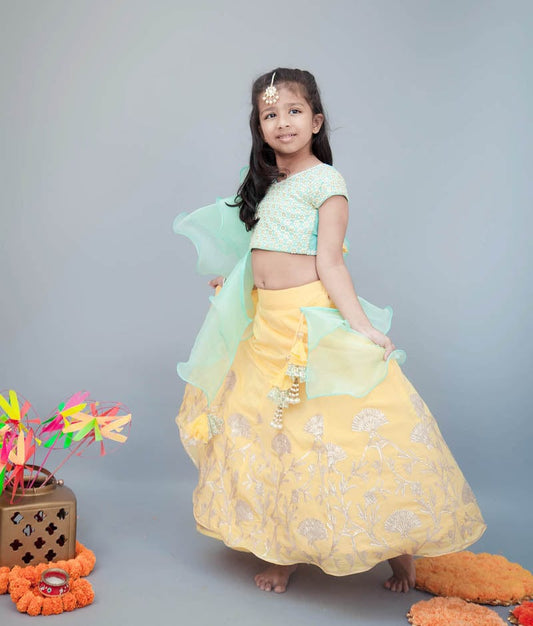
The lehenga is the centrepiece of girls' designer ethnic wear, and it is the category in which the difference between mass-market and designer is most immediately visible. A designer lehenga for girls has a skirt with sufficient inner structure (petticoat lining or crin foundation) to hold its shape and volume throughout an event. The choli is lined in soft fabric and fitted to a child's proportions. The embellishment is consistent, secure, and placed with visual intention.
The Peach and Green Gota Embroidery Lehenga Choli with Organza Dupatta at Fayon Kids exemplifies this standard. The gota patti embellishment is applied with the consistency and security of quality hand-applied work, and the organza dupatta is a separate piece of genuine quality rather than a token fabric scrap included as an afterthought.
Explore the full range of designer-quality lehenga options in the Girls Lehenga Collection at Fayon Kids.
Designer Sharara Sets for Girls
The sharara set in designer children's ethnic wear is distinguished by the quality of the fabric's drape and the construction of the wide-legged silhouette. A well-made designer sharara hangs in even, fluid waves from the waistband. The kurti top is constructed with attention to proportion and is lined in soft fabric throughout. The embellishment is applied consistently and with visual logic.
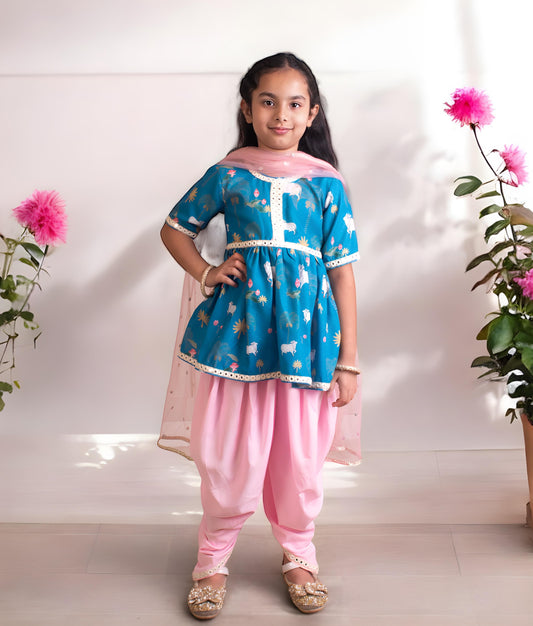
The Blue Chanderi Kurti with Peach Net Sharara from Fayon Kids demonstrates how Chanderi fabric, properly sourced and handled, creates a sharara set with a visual quality that synthetic alternatives simply cannot achieve. Explore more options in the Girls Sharara Collection.
Designer Sherwanis and Kurtas for Boys
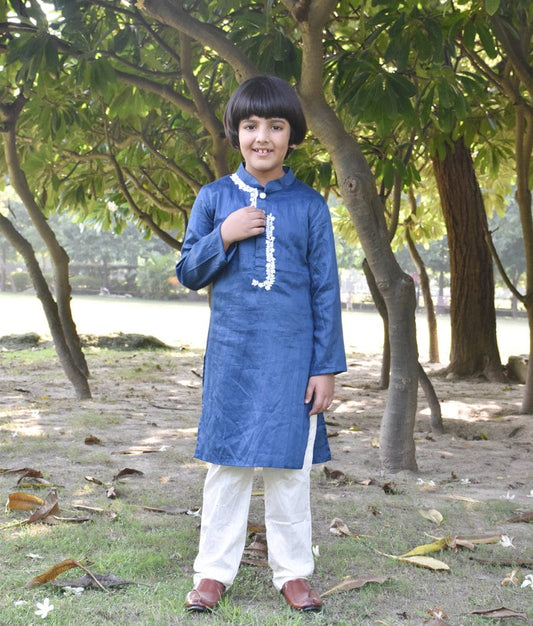
In the boys' category, the sherwani is the pinnacle of designer ethnic wear. A well-constructed boys' sherwani has a structured front panel, a correctly proportioned collar and cuff, and a skirt section that falls evenly and flares appropriately. Lesser alternatives collapse at the front panel and have collars that do not sit correctly.
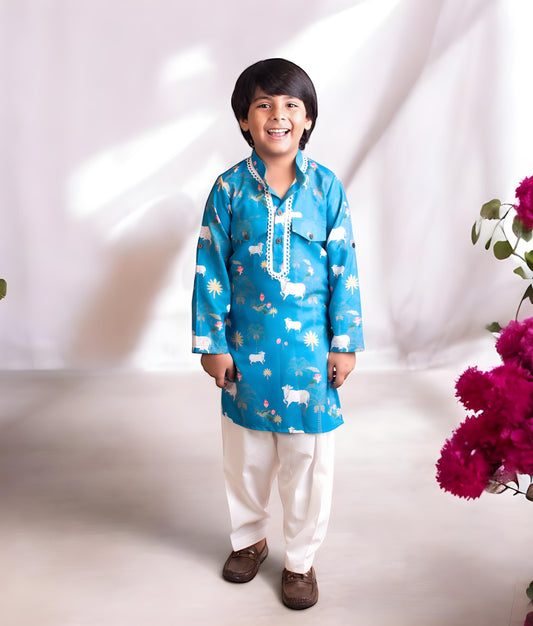
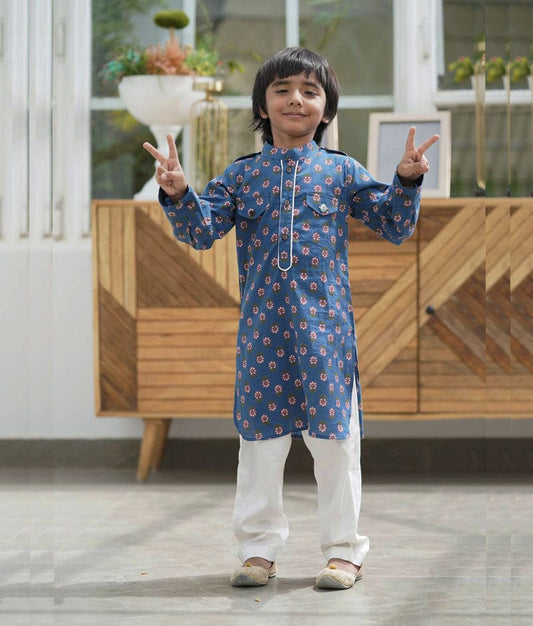
Quality kurta sets for boys demonstrate their designer credentials in the fabric choice, the embroidery consistency, and the Nehru jacket construction, which should hold its shape throughout the event without collapsing at the shoulders.
Designer Festive Gowns for Girls
The princess gown category for girls is one of the most clearly differentiated between mass-market and designer. A designer princess gown for a girl has an inner crinoline or petticoat structure that holds the skirt volume independently, meaning the child does not carry or manage the skirt's weight. The bodice is structured and lined. The embellishment is placed with visual intention.
The Princess Collection at Fayon Kids brings designer-quality construction to the gown category, with pieces that hold their structure and their beauty through the full duration of a celebration.
The Investment Argument: Why Designer Ethnic Wear Costs More and Is Worth It
The additional cost of designer ethnic wear for children relative to mass-market alternatives is justified by several factors that parents who have experienced both consistently recognise.
Photographs last forever. The photographs taken of children in designer ethnic wear at celebrations are the ones that become framed and displayed, shared across family networks, and revisited for decades. A beautifully made lehenga that photographs magnificently is creating images that will be treasured long after the cost of the piece has been forgotten.
Quality pieces survive multiple wearings. A designer ethnic piece in quality fabric, properly cared for, can be worn at multiple celebrations across a season or even across years as the child grows slowly. Mass-market pieces frequently do not survive their first washing intact.
Children feel the difference. A child wearing something beautifully made and properly fitted carries herself differently. She stands taller, moves more confidently, and participates more fully in the celebration because she is comfortable and feels genuinely beautiful. This is not a trivial consideration; it is the difference between a child who is present at a celebration and one who is managing her outfit.
Craftsmanship deserves support. The embellishment techniques used in quality ethnic wear, particularly gota patti, hand embroidery, and mirror work, are craft traditions that deserve financial support to survive. Choosing quality designer ethnic wear for children is a small act of cultural preservation as much as it is a personal style choice.
Fayon Kids: Designer Ethnic Wear Built for Children
Fayon Kids has built its reputation in the Indian children's ethnic wear market precisely through the qualities that define designer ethnic wear. Fabrics are selected for their specific properties and their appropriateness for children's wear. Embellishment is applied with the security and consistency that a garment worn by an active child through a long celebration requires. Construction proportions are designed around children's bodies rather than scaled down from adult patterns.
The result is an ethnic wear range that consistently delivers on the promise that designer children's wear makes: beautiful garments that look magnificent in photographs, feel comfortable in wear, and reflect the cultural richness of the occasions they are made for.
For complete family dressing, including boys' ethnic options and the Safa Pagdi for completing boys' festive looks, and girls' gown alternatives for contemporary celebrations, explore the complete designer ethnic wear range at Fayon Kids.
For age-specific designer options, including pieces designed specifically for the pre-teen stage, the 10-Year-Old Dresses for Weddings Collection at Fayon Kids offers designer-quality pieces for girls at every stage of childhood.
FAQs: Designer Ethnic Wear for Kids
Q1. What makes designer ethnic wear for kids worth the additional cost?
Designer pieces use quality fabrics, secure embellishments, and properly proportioned construction that photographs better, lasts longer, and is more comfortable for children through long celebration events.
Q2. How do I identify genuinely designer ethnic wear versus mass-market alternatives?
Look for specific fabric descriptions, visible quality in embellishment placement and consistency, soft interior finishing, and properly proportioned construction built for a child's body rather than scaled from adult patterns.
Q3. At what age should I start investing in designer ethnic wear for children?
From the first birthday onward, as this is when celebration photographs become important family records. A well-made first birthday or early festive outfit creates images that families treasure for decades.
Q4. Can designer ethnic wear for kids be reused for multiple occasions?
Yes. Quality fabric and secure embellishment mean designer pieces survive multiple wearings and washings, making them better value over time than cheaper alternatives that do not last.
Q5. What is the most important quality marker when buying designer ethnic wear for kids?
Embellishment security is the most practically important marker. Quality embellishment stays intact through an entire event and subsequent cleaning. Mass-market embellishment frequently does not.
Q6. How do I care for designer ethnic wear for kids to preserve its quality?
Dry clean heavily embellished pieces. Store hanging in breathable garment bags. Avoid folding embellished fabric. Prompt cleaning after events prevents marks from setting permanently.