


-
Regular price Rs.6,450Sale price Rs.6,450 Regular priceUnit price per
Ships in 5-6 days.
Get it by Thu, Nov 26 – Fri, Nov 27
-
Regular price Rs.13,298Sale price Rs.13,298 Regular priceUnit price per
Ships in 5-6 days.
Get it by Thu, Nov 26 – Fri, Nov 27
-
Regular price Rs.9,900Sale price Rs.9,900 Regular priceUnit price per
Ships in 5-6 days.
Get it by Thu, Nov 26 – Fri, Nov 27
-
Regular price Rs.7,468Sale price Rs.7,468 Regular priceUnit price per
Ships in 5-6 days.
Get it by Thu, Nov 26 – Fri, Nov 27
-
Regular price Rs.3,990Sale price Rs.3,990 Regular priceUnit price per
Rs.6,650Ships in 5-6 days.
Get it by Thu, Nov 26 – Fri, Nov 27
Sale -
Regular price Rs.7,790Sale price Rs.7,790 Regular priceUnit price per
Ships in 5-6 days.
Get it by Thu, Nov 26 – Fri, Nov 27
-
Regular price Rs.13,365Sale price Rs.13,365 Regular priceUnit price per
Ships in 5-6 days.
Get it by Thu, Nov 26 – Fri, Nov 27
-
Regular price Rs.18,000Sale price Rs.18,000 Regular priceUnit price per
Ships in 5-6 days.
Get it by Thu, Nov 26 – Fri, Nov 27
-
Regular price Rs.12,576Sale price Rs.12,576 Regular priceUnit price per
Ships in 5-6 days.
Get it by Thu, Nov 26 – Fri, Nov 27
-
Regular price Rs.9,900Sale price Rs.9,900 Regular priceUnit price per
Ships in 5-6 days.
Get it by Thu, Nov 26 – Fri, Nov 27
-
Regular price Rs.4,936Sale price Rs.4,936 Regular priceUnit price per
Ships in 5-6 days.
Get it by Thu, Nov 26 – Fri, Nov 27
-
Regular price Rs.4,249Sale price Rs.4,249 Regular priceUnit price per
Rs.7,082Ships in 5-6 days.
Get it by Thu, Nov 26 – Fri, Nov 27
Sale -
Regular price Rs.6,760Sale price Rs.6,760 Regular priceUnit price per
Ships in 5-6 days.
Get it by Thu, Nov 26 – Fri, Nov 27
-
Regular price Rs.7,468Sale price Rs.7,468 Regular priceUnit price per
Ships in 5-6 days.
Get it by Thu, Nov 26 – Fri, Nov 27
-
Regular price Rs.6,760Sale price Rs.6,760 Regular priceUnit price per
Ships in 5-6 days.
Get it by Thu, Nov 26 – Fri, Nov 27
-
Regular price Rs.13,520Sale price Rs.13,520 Regular priceUnit price per
Rs.22,533Ships in 5-6 days.
Get it by Thu, Nov 26 – Fri, Nov 27
Sale -
Regular price Rs.15,387Sale price Rs.15,387 Regular priceUnit price per
Ships in 5-6 days.
Get it by Thu, Nov 26 – Fri, Nov 27
-
Regular price Rs.29,980Sale price Rs.29,980 Regular priceUnit price per
Ships in 5-6 days.
Get it by Thu, Nov 26 – Fri, Nov 27
-
Regular price Rs.8,428Sale price Rs.8,428 Regular priceUnit price per
Rs.14,046Ships in 5-6 days.
Get it by Thu, Nov 26 – Fri, Nov 27
Sale -
Regular price Rs.8,498Sale price Rs.8,498 Regular priceUnit price per
Ships in 5-6 days.
Get it by Thu, Nov 26 – Fri, Nov 27
-
Regular price Rs.15,905Sale price Rs.15,905 Regular priceUnit price per
Ships in 5-6 days.
Get it by Thu, Nov 26 – Fri, Nov 27
-
Regular price Rs.25,478Sale price Rs.25,478 Regular priceUnit price per
Ships in 5-6 days.
Get it by Thu, Nov 26 – Fri, Nov 27
-
Regular price Rs.8,591Sale price Rs.8,591 Regular priceUnit price per
Rs.12,951Ships in 5-6 days.
Get it by Thu, Nov 26 – Fri, Nov 27
Sale -
Regular price Rs.17,297Sale price Rs.17,297 Regular priceUnit price per
Ships in 5-6 days.
Get it by Thu, Nov 26 – Fri, Nov 27


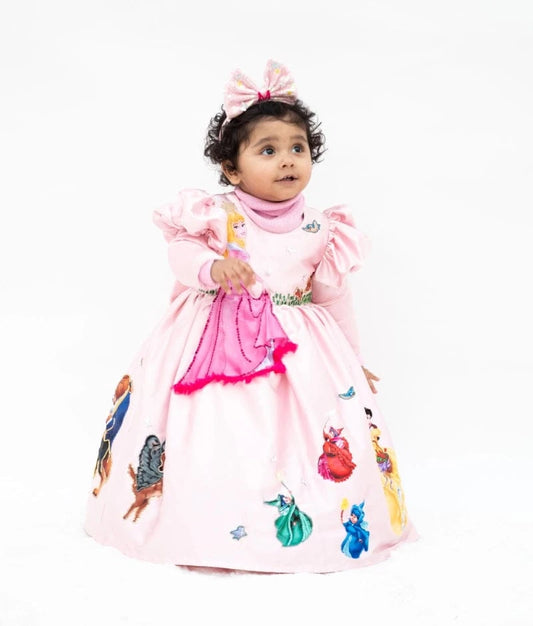


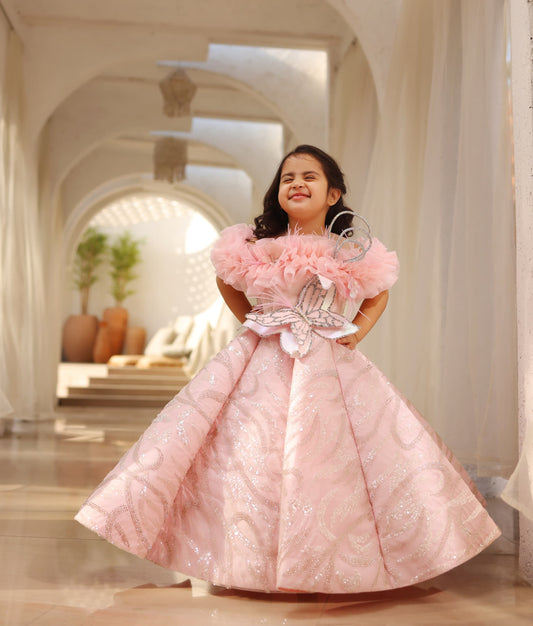


Gown for Girls: How to Choose the Right Style, Fabric, and Fit Every Time
A gown for girls is a full-length or floor-grazing dress designed for special occasions, from birthday celebrations and festive events to school functions and formal gatherings. Unlike a simple frock or party dress, a gown carries structured silhouette work, layered skirts, and embellished detailing that elevate the look. This guide covers everything parents need to evaluate before buying.
Understanding Gown Styles and Silhouettes for Girls
Princess and Ball Gown Cuts
The princess-cut gown features a fitted bodice that flows into a full, voluminous skirt, making it the most popular silhouette for girls aged 3 to 12. This style uses internal boning or a crinoline petticoat to hold the skirt shape, which is why it photographs so well as a birthday dress for girls and at festive events. Parents should check whether the petticoat is removable, since a detachable layer makes the gown easier to launder and more comfortable for extended wear.
A-Line and Empire Waist Gowns
A-line gowns taper gently from the shoulders to the hem, offering a slimmer silhouette that suits taller girls and formal school events where movement is required. Empire waist gowns sit at the seam just below the chest, which distributes fabric evenly and works particularly well for toddlers and infants because it avoids pressure on the waist. Both cuts are easier to size correctly than ball gowns because they tolerate a wider range of body proportions without requiring alterations.
|
Silhouette |
Best Age Range |
Ideal Occasion |
Key Feature |
|
Princess / Ball Gown |
3 to 12 years |
Birthday, festive party |
Full skirt with petticoat |
|
A-Line |
6 to 14 years |
School function, formal event |
Gradual flare from shoulder |
|
Empire Waist |
0 to 5 years |
Naming ceremony, first birthday |
High seam below chest |
|
Mermaid / Fit-and-Flare |
10 to 16 years |
Teen formal, pageant |
Fitted through hips, flares at knee |
Fabric Selection: What Actually Matters for Comfort and Durability
Breathable Fabrics for Daytime and Indoor Events
Georgette and chiffon are the most commonly used outer fabrics in girls' gowns because they drape beautifully and remain lightweight even in layered skirts. Both fabrics require a cotton or satin lining against the skin, since raw georgette can cause irritation during long events. When inspecting a gown, pull the inner lining away from the outer shell and confirm it covers the full length of the bodice and skirt, not just the torso. These fabrics are especially popular for a first birthday dress for baby girl styles where comfort during long celebrations is essential.
Structured Fabrics for Evening and Formal Wear
Taffeta and duchess satin hold their shape without internal boning, making them practical for evening gowns where a crisp silhouette is expected. Velvet is a strong choice for winter dresses for girls and festive seasons because it retains warmth while adding a rich texture that photographs well under artificial lighting. Check fabric weight by holding the gown at arm's length; a quality structured gown should hold its skirt shape without collapsing, even before it is worn.
-
Georgette: Lightweight and flowy, best for layered skirts in warm climates.
-
Taffeta: Crisp and structured, holds shape without extra support layers.
-
Velvet: Warm and rich-textured, ideal for winter parties and festive occasions.
-
Satin: Smooth and lustrous, commonly used for linings and bodice panels.
-
Net / Tulle: Used for overlay skirts; check for soft-finish tulle to avoid skin scratching.
How to Size a Gown for Girls Correctly
Taking Accurate Measurements at Home
Gown sizing differs from standard dress sizing because the length measurement is critical: a gown that pools at the floor creates a tripping hazard, while one that sits above the ankle loses its formal effect. Measure from the top of the shoulder straight down to the desired hem point, and compare this against the brand's size chart rather than relying on age-based sizing alone. Girls between sizes should always size up in the skirt and have the bodice taken in, since letting out a tight bodice is rarely possible without damaging embellishments.
Fit Checkpoints Before Finalising a Purchase
A well-fitted gown should allow two fingers of space at the back zipper or button closure, confirming room for movement without gaping. The shoulder seam must sit exactly at the edge of the shoulder, not drooping toward the arm, which is the most common fit error in children's formalwear. Platforms like Fayonkids offer designer kids' gowns with detailed size guides covering chest, waist, and length measurements, making remote sizing far more reliable than age-only charts. Their range also includes party wear western dresses for parents seeking contemporary silhouettes alongside traditional gown styles.
-
Measure chest circumference at the fullest point, keeping the tape parallel to the floor.
-
Measure waist at the natural waistline, approximately two inches above the navel.
-
Measure shoulder-to-hem length with the child standing upright in flat shoes.
-
Cross-reference all three measurements against the brand's size chart before selecting a size.
-
If measurements fall between two sizes, choose the larger size and plan for minor alterations.
Embellishments, Care, and Value Evaluation
Evaluating Embellishments for Safety and Longevity
Sequins, beads, and embroidered motifs are standard embellishments on girls' gowns, but the attachment method determines both safety and durability. Hand-stitched beadwork holds significantly longer than glued embellishments; gently tug a single bead at the hem. If it releases with light pressure, the gown will shed decorations after one or two wears. For children under five, avoid gowns with large detachable beads or button embellishments that present a choking risk, and instead look for flat embroidery or printed sequin fabric. For more information, explore the winter dresses for girls.
|
Price Range (INR) |
Typical Fabric Quality |
Embellishment Type |
Care Method |
|
800 to 1,500 |
Polyester net, basic lining |
Glued sequins, printed motifs |
Hand wash, cold water |
|
1,500 to 3,500 |
Georgette, satin lining |
Machine embroidery, stitched sequins |
Gentle hand wash or dry clean |
|
3,500 and above |
Taffeta, velvet, duchess satin |
Hand embroidery, zardozi, beadwork |
Dry clean only |
-
Check interior seam finishing: overlocked edges signal better construction quality. -
Confirm the zipper is nylon-coil or concealed metal, not exposed plastic, for durability.
-
Store gowns on padded hangers inside a breathable garment bag to prevent fabric distortion.
-
Steam rather than iron embellished panels to avoid melting sequins or flattening embroidery.
Frequently Asked Questions
What is the difference between a gown and a frock for girls?
A gown is a full-length or floor-grazing formal dress with structured construction, while a frock is typically a shorter, casual or semi-formal dress worn for everyday or light party occasions.
Which fabric is best for a girl's gown in a hot climate?
Georgette with a cotton lining is the most practical choice for warm climates because it drapes well, stays lightweight, and the cotton layer prevents skin irritation during long events.
How do I choose the right gown size for my daughter online?
Always measure chest circumference, waist, and shoulder-to-hem length, then compare all three against the brand's specific size chart rather than relying on age-based sizing alone.
Are embellished gowns safe for toddlers?
Gowns with flat embroidery or printed sequin fabric are safe for toddlers, but avoid styles with large detachable beads, buttons, or loosely glued decorations that present a choking hazard.
How should I store a girl's gown after an event?
Hang the gown on a padded hanger inside a breathable garment bag, away from direct sunlight, to preserve the fabric structure and prevent embellishment damage between wears.


