



-
Regular price Rs.4,539Sale price Rs.4,539 Regular priceUnit price per
Ships in 5-6 days.
Get it by Thu, Sep 10 – Fri, Sep 11
-
Regular price Rs.5,186Sale price Rs.5,186 Regular priceUnit price per
Ships in 5-6 days.
Get it by Thu, Sep 10 – Fri, Sep 11


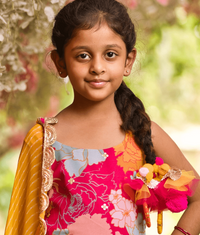
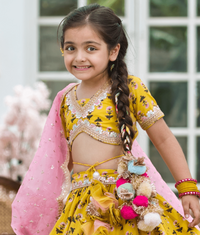
Indo Western Dress for Girls: The Fashion-Forward Choice for the Modern Celebration
The modern Indian girl does not always want to choose. She does not want to decide between her culture and her contemporary aesthetic, between the richness of ethnic embroidery and the clean lines of western silhouettes. She wants both, layered together in a way that feels entirely her own. The indo western dress for girls exists precisely to give her that freedom.
Indo western fashion for children has moved far beyond the awkward early experiments of the category. It is no longer simply a kurti worn over jeans, or a lehenga skirt paired with a crop top. The best indo western dresses for girls today are genuinely designed as fusion pieces, where the relationship between the eastern and western elements is intentional, harmonious, and visually sophisticated.
What Defines a Truly Indo Western Dress
The defining characteristic of a great indo western dress is balance. Neither the ethnic nor the western element should overwhelm the other. When the balance is right, the garment feels original rather than confused. When it tips too far in either direction, it simply reads as an ethnic outfit with an unusual detail, or a western dress with token embroidery.
The most successful indo western pieces for girls achieve their balance through one of several design approaches. Some use a western silhouette (a fit-and-flare dress, a layered skirt, a structured jacket) and apply ethnic embellishment techniques (gota patti, mirror work, thread embroidery) to it. Others take an ethnic base (a kurta, a lehenga skirt, a sharara) and introduce western elements through cut, construction, or fabric choice.
Both approaches can yield stunning results. The key for parents shopping in this category is to look for pieces where the design feels considered rather than accidental.
The Occasions That Call for Indo Western Dressing
Indo western dresses for girls occupy a specific occasion space. They are generally better suited to semi-formal events than to either the most traditional or the most casual end of the spectrum.
For a traditional religious ceremony like a puja or a temple visit, a fully ethnic outfit (lehenga, salwar suit, or saree for older girls) is almost always more appropriate. For a casual family lunch or a children's birthday party, a simple western dress is perfectly fine.
Indo western dressing shines at occasions that sit between these poles. A mehendi ceremony is a perfect example: it is festive and celebratory, but it is also relaxed and playful. A fusion piece that brings colour and embellishment without the full formality of a lehenga is ideal here. Similarly, school cultural events, family reunions, and destination wedding functions in casual settings are all perfect indo western occasions.
Key Silhouettes in Indo Western Girls' Fashion Right Now
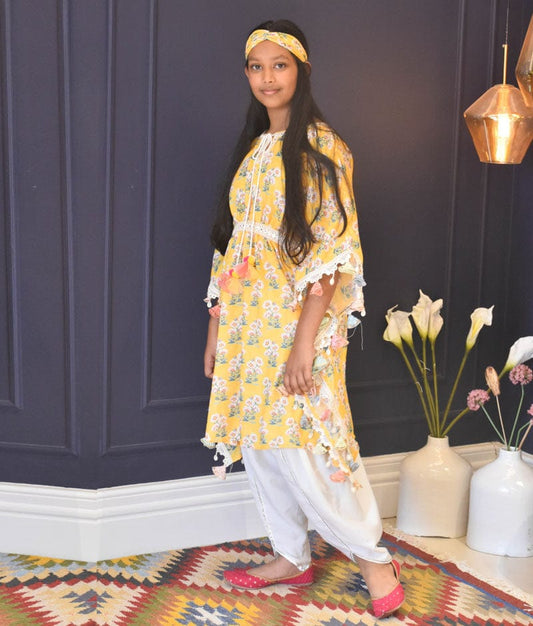
The kurta-dress is one of the most popular indo western silhouettes for girls currently. It takes the basic kurta structure but extends and shapes it into a dress silhouette, often with a defined waist, flared hem, and western-style sleeves. The result is a garment that reads as clearly ethnic in its embroidery and neckline detailing but feels contemporary in its overall shape.
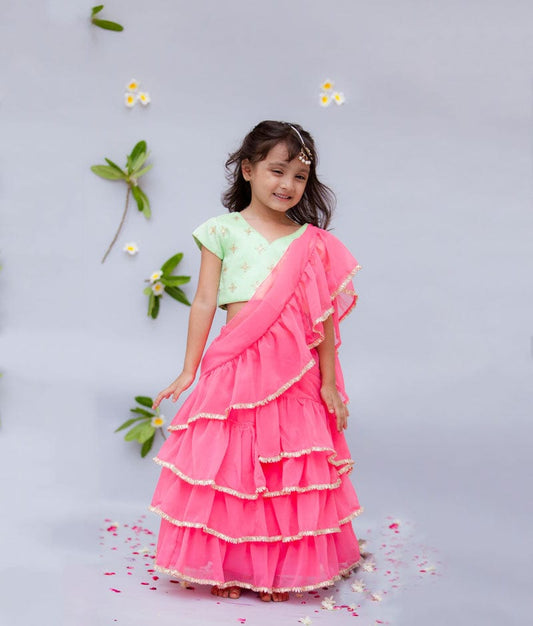
The lehenga-gown hybrid is another strong option, particularly for more formal occasions. This piece takes the embellished, layered quality of a lehenga skirt and combines it with a fitted bodice that is structured more like a western gown. The result is one of the most photographically stunning silhouettes in children's fashion right now.
The sharara with a contemporary top bridges the indo western gap in a different way, using the deeply ethnic sharara silhouette as the foundation and pairing it with a more relaxed or fashion-forward top. This works exceptionally well for older girls who want to express a stronger personal style. The Girls Sharara Collection at Fayon Kids offers a range of options that translate well into indo western styling contexts.
Colour and Embellishment in Indo Western Pieces
The colour palette of a great indo western dress for girls is often one of its most striking features. Where traditional ethnic wear gravitates toward auspicious and celebratory colours like red, yellow, and saffron, indo western pieces frequently explore more nuanced territory.
Dusty rose, sage green, powder blue, and ivory are all performing strongly in the current indo western market for children. These are colours that feel contemporary and global while still reading as festive when combined with the right embellishment.
The embellishment on an indo western piece should feel purposeful rather than decorative. Gota patti applied to the collar and cuffs of a western-style dress, for example, reads as a design statement. The same gota applied all over the dress starts to look like a conventional ethnic garment. Less is often more in the fusion context.
How Indo Western Styling Works with Other Ethnic Pieces
One of the great pleasures of indo western dressing is how well it works alongside more conventional ethnic outfits in a family group. A girl in a beautifully styled indo western dress stands out from a group of lehenga-clad cousins without looking out of place. She is clearly part of the celebration, clearly connected to the occasion's cultural identity, while expressing something distinctly individual.
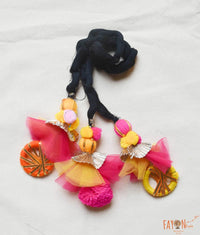
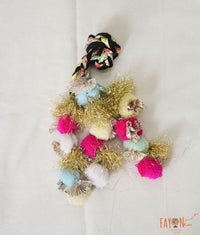
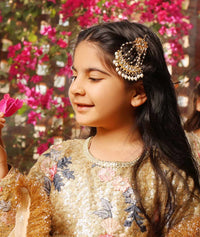
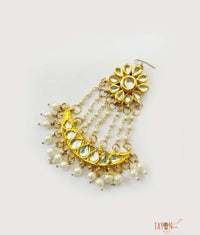
This individuality is even more pronounced when the indo western look is completed with traditional accessories. A pair of traditional juttis with an indo western dress creates an interesting visual tension that feels intentional and stylish. A Parandi worn in a loosely braided hairstyle adds ethnic depth to what might otherwise read as a predominantly contemporary look.
For families styling multiple children, consider coordinating an indo western look for one child with a more conventionally ethnic look for a sibling. A girl in an indo western dress alongside a boy in a well-chosen kurta pajama, accessorised with a Safa Pagdi from the Safa Pagdi Collection, creates a sibling pairing that looks curated and thoughtful rather than matched in a heavy-handed way.
Age-Appropriate Indo Western Choices
For younger girls (ages three to seven): The priority is comfort and the visual delight of the garment. Kurta-dresses in bright colours with light embellishment are ideal. Avoid anything too structured or too heavily embellished, since young children need freedom of movement.
For girls between eight and twelve: This is the age group most energetically engaged with fashion identity. Indo western dressing resonates strongly with girls in this range because it allows them to feel contemporary while still looking appropriate for family occasions. Lehenga-gown hybrids and sharara-with-contemporary-top combinations work beautifully here.
For teenagers: The full range of indo western silhouettes is available and appropriate. This is the age group for whom the category's most sophisticated pieces are often designed, and older girls can carry heavier embellishment, more structured cuts, and more complex colour combinations with ease.
For girls in the specific ten-year age group, the dedicated 10-Year-Old Dresses for Weddings Collection at Fayon Kids includes options that bridge the ethnic and semi-western aesthetic particularly well.
Building an Indo-Western Wardrobe for a Young Girl
The mistake most parents make when exploring Indo-Western fashion for their daughters is treating it as an either/or purchase. They either buy the lehenga for the wedding and leave the Indo-Western pieces for some hypothetical future occasion, or they go fully contemporary and miss the cultural connection entirely.
The smarter approach is to build a small but intentional ethnic and fusion wardrobe that gives a child options across the full range of occasions she will encounter. A lehenga from the Girls Lehenga Collection for the most formal events, a sharara set for semi-formal functions, and one or two carefully chosen Indo-Western pieces for the occasions in between create a genuinely versatile wardrobe.
FAQs
Q1. What makes a dress "Indo-Western" rather than purely ethnic?
A balance between ethnic embellishment and western silhouette, with neither element overpowering the other.
Q2. When should a girl wear Indo Western instead of a lehenga?
For semi-formal events like mehendi ceremonies or school functions, rather than pujas or weddings.
Q3. What colours suit Indo Western outfits best?
Dusty rose, sage green, powder blue, and ivory feel contemporary while staying festive.
Q4. What's a lehenga-gown hybrid?
A fusion piece combining a lehenga's embellished skirt with a fitted, western-style bodice.
Q5. Are Indo Western dresses suitable for religious ceremonies?
Not ideally; fully ethnic outfits are more appropriate for pujas and temple visits.
Q6. What accessories pair well with Indo Western dresses?
Juttis and a Parandi add ethnic depth to an otherwise contemporary look.