



-
Regular price Rs.3,477Sale price Rs.3,477 Regular priceUnit price per
Rs.3,863Ships in 5-6 days.
Get it by Thu, Sep 10 – Fri, Sep 11
Sale -
Regular price Rs.18,512Sale price Rs.18,512 Regular priceUnit price per
Ships in 2-3 days.
Get it by Tue, Sep 08 – Thu, Sep 10
-
Regular price Rs.6,180Sale price Rs.6,180 Regular priceUnit price per
Rs.6,384Ships in 5-6 days.
Get it by Thu, Sep 10 – Fri, Sep 11
Sale -
Regular price Rs.4,185Sale price Rs.4,185 Regular priceUnit price per
Ships in 5-6 days.
Get it by Thu, Sep 10 – Fri, Sep 11
-
Regular price Rs.3,541Sale price Rs.3,541 Regular priceUnit price per
Ships in 5-6 days.
Get it by Thu, Sep 10 – Fri, Sep 11
-
Regular price Rs.6,760Sale price Rs.6,760 Regular priceUnit price per
Ships in 5-6 days.
Get it by Thu, Sep 10 – Fri, Sep 11
-
Regular price Rs.18,512Sale price Rs.18,512 Regular priceUnit price per
Ships in 5-6 days.
Get it by Thu, Sep 10 – Fri, Sep 11
-
Regular price Rs.18,802Sale price Rs.18,802 Regular priceUnit price per
Ships in 5-6 days.
Get it by Thu, Sep 10 – Fri, Sep 11







Kids Wedding Lehenga Online: The Complete Consumer Journey from Research to Celebration Day
Buying a kids wedding lehenga online is a journey that unfolds across several distinct phases, each with its own decisions, its own potential pitfalls, and its own satisfactions when it goes well. From the first moment of browsing through the photography of the celebration itself and the care of the lehenga afterwards, every stage of this journey can be navigated more smoothly with the right knowledge.
This guide is structured around that journey. It takes you through the research phase, where you are identifying what you want and learning to evaluate options intelligently; the purchase phase, where you are making specific decisions about fabric, colour, size, and embellishment; the preparation phase, where you are getting the lehenga ready for the wedding; and the celebration phase, where the lehenga finally meets the occasion it was made for.
Phase One: Research and Discovery
Defining What You Need Before You Start Browsing
The most common mistake in shopping for a kids wedding lehenga online is starting with browsing rather than starting with definition. Before you open a single browser tab, answer the following questions clearly.
Which wedding function is the lehenga for? The embellishment and fabric requirements for a mehendi lehenga are completely different from those for a wedding ceremony lehenga. Knowing the function before you browse prevents you from falling in love with a piece that is wrong for your specific occasion.
What is the approximate age and size of the child? This is not the same as knowing the exact size, which you will measure precisely in the purchase phase, but having a general size range in mind prevents you from wasting time looking at pieces that would not be available in the right size.
What is the colour palette of the wedding? If the bride and wedding have a defined colour scheme, coordinating the girl's lehenga within that palette creates a more cohesive look in the wedding photographs.
What is your budget? Kids wedding lehenga prices vary enormously, from very affordable mass-market pieces to genuinely premium designer options. Knowing your range before you browse prevents the frustration of falling in love with options outside it.
Identifying Trustworthy Online Sources
The kids wedding lehenga market online includes sources of widely varying quality and reliability. Before spending time evaluating specific pieces from a source, assess the source itself.
Look for brands with an established presence in children's ethnic wear, a clear design identity across their range, and a consistent track record of customer satisfaction. The quality and depth of the product information provided is itself a signal: brands that invest in detailed descriptions, multiple photographs, and real customer reviews are typically brands that invest equally in the quality of their products.
For a trusted source of kids wedding lehenga options with detailed product information and a demonstrated commitment to quality construction and fabric standards, the Girls Lehenga Collection at Fayon Kids is a strong starting point. The range covers the full spectrum of wedding-appropriate options from the most formal ceremony lehengas to lighter, more colourful options for pre-wedding functions.
Understanding the Wedding Function Dress Code
Each wedding function has its own dress code logic, and understanding this before you start shopping prevents the most common lehenga selection mistakes.
The mehendi calls for bright, joyful colours and lighter embellishment. Yellow, green, orange, and fuchsia all work beautifully. The fabric should be comfortable and the construction practical for an event involving sitting, participating in folk activities, and active celebration.
The sangeet calls for more visual drama than the mehendi but in a more contemporary, fashion-forward direction. Sequence embellishment and mirror work perform brilliantly under sangeet stage lighting. Colours can be bolder and more fashion-forward than at the ceremony.
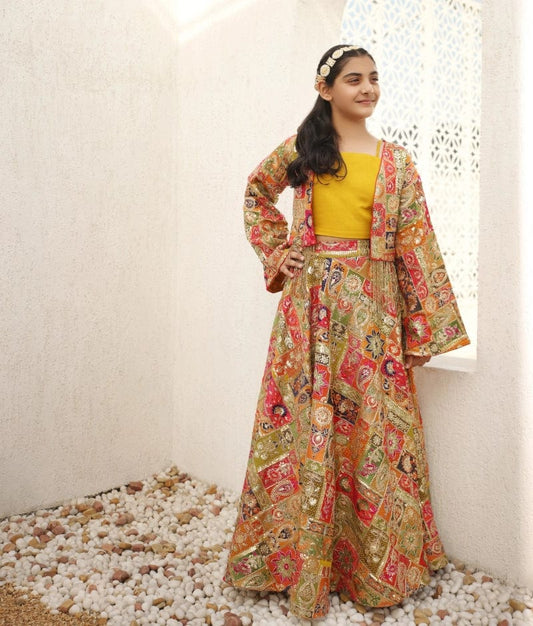
The wedding ceremony is the most formal function and calls for the richest fabric, the heaviest embellishment, and the most considered overall construction. Silk, velvet, and richly embroidered georgette are the appropriate fabric choices. Embellishment should be of genuine quality: zari, gota patti, or heavy thread work applied with consistency and security.
The reception allows the most personal expression. Contemporary silhouettes, bold colour combinations, and even Indo-Western lehenga interpretations are appropriate here.
Phase Two: The Purchase Decision
Fabric Evaluation in an Online Context
You cannot feel the fabric through a screen. But you can learn to read fabric descriptions with enough precision to make confident purchasing decisions based on them.
When a listing says "georgette," check whether it specifies the weight of the georgette and whether it is natural or synthetic. Natural georgette drapes differently from synthetic alternatives, and the difference is significant in how the lehenga moves and photographs.
When a listing says "silk," check whether it is specified as raw silk, dupion silk, art silk, or Banarasi silk. These are very different fabrics with very different properties and price points. "Art silk" is typically a polyester-based synthetic that mimics the appearance of real silk; it is significantly less expensive and less beautiful than genuine silk.
The best brands are specific about their fabrics because they have nothing to hide. Vagueness in fabric description is almost always a signal that the fabric would not bear scrutiny if described precisely.
For wedding ceremony lehengas, the fabrics that perform best are raw silk, dupion silk, velvet, and embellished georgette with a quality lining. For pre-wedding functions, georgette, Chanderi, and cotton silk blends offer more comfort for longer events while still looking genuinely festive.
Embellishment Assessment
Wedding lehenga embellishment is visible in product photographs, and with practice you can learn to assess its quality from photographs alone.
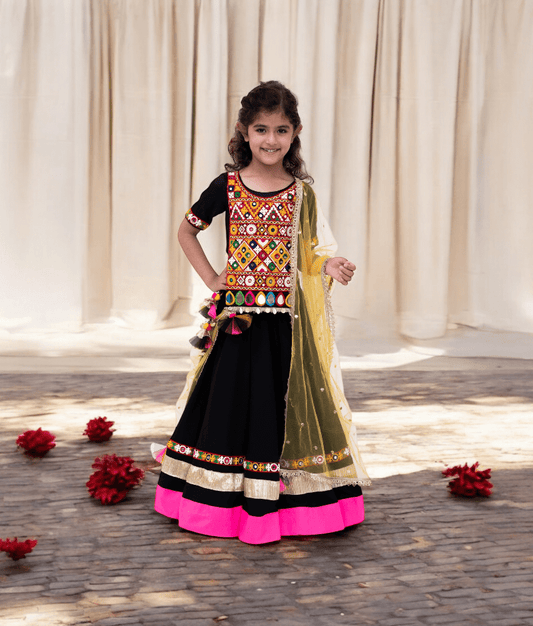
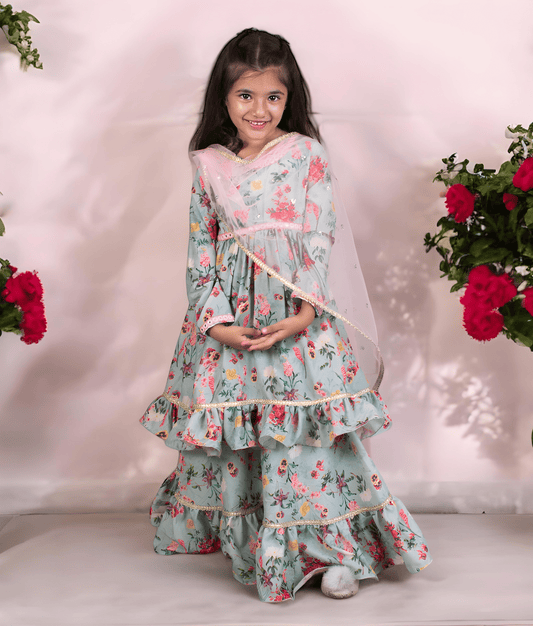
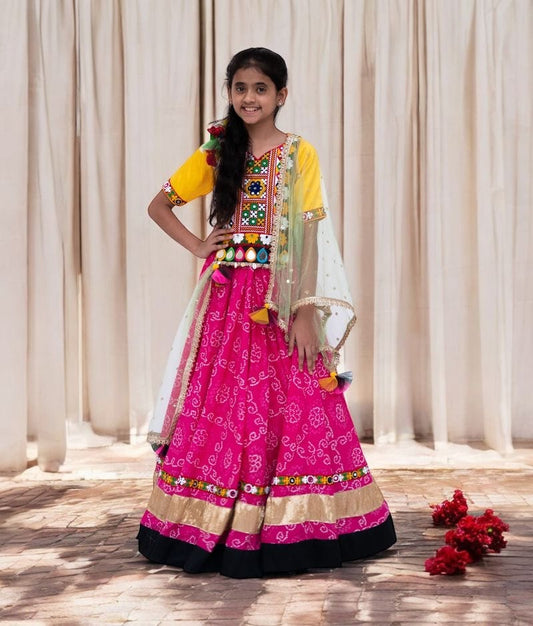
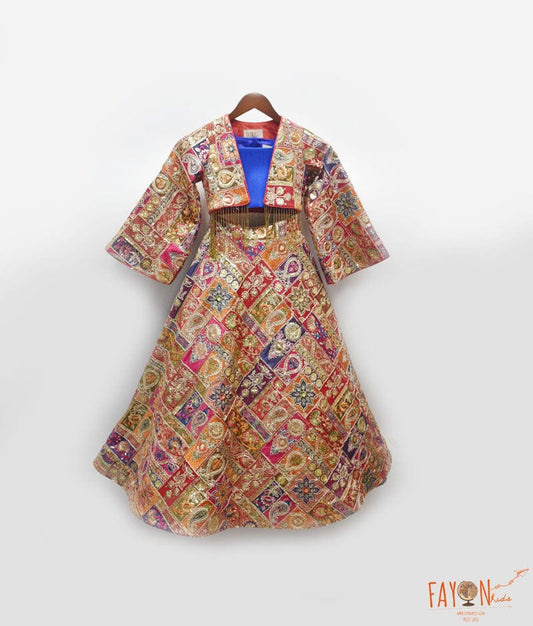
Look for consistency in embellishment placement. In a quality lehenga, the pattern of gota patti, zari embroidery, or sequence work will be even and consistent across the entire visible area. In a lower-quality piece, the embellishment will be uneven, with visible variations in density and alignment.
Look for the relationship between embellishment and fabric. Quality embellishment appears to be part of the fabric rather than applied on top of it. The threads or decorative elements emerge from and integrate with the fabric's surface. Poor quality embellishment sits on top of the fabric and appears to float free of it, which is a sign that it is adhered rather than stitched.
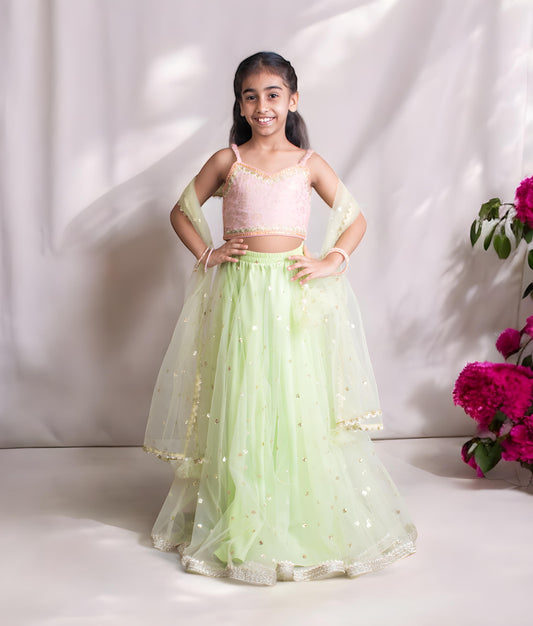
The Peach and Green Gota Embroidery Lehenga Choli with Organza Dupatta from Fayon Kids demonstrates what consistent, well-integrated gota patti embellishment looks like in product photographs: the pattern is even, the application appears secure, and the embellishment integrates with the fabric surface rather than floating on top of it.
The Size Decision
Measuring accurately is the single most important practical step in buying a kids wedding lehenga online. Take three measurements on the day you are ready to order, not from memory of a measurement taken weeks ago.
Chest circumference: measured around the fullest part of the chest with the child standing naturally and breathing normally. This measurement determines the choli fit.
Waist circumference: measured at the natural waist, which in children is typically at the belly button level. This determines the lehenga skirt fit unless the skirt has a drawstring waist, in which case it is adjustable.
Height from crown to floor: this measurement determines the appropriate lehenga length. A lehenga that is too long will drag on the floor and trip the child; one that is too short will look incorrectly proportioned.
When measurements fall between two sizes, size up in the choli and use the size that fits the waist measurement for the skirt if the skirt has a fixed waist. If both pieces are in the same size, size up overall and have the choli taken in by a tailor if necessary.
For wedding ceremony lehengas specifically, fit through the choli is the most critical measurement. A beautifully embellished lehenga choli that fits correctly through the chest and shoulders looks extraordinary; one that is too tight or too loose in the bodice looks incorrect regardless of how beautiful the embellishment is.
Checking the Return and Exchange Policy
Before finalising any purchase of a kids wedding lehenga online, read the return and exchange policy carefully. Understand the time window for returns, the condition requirements (whether the lehenga must be unworn and in original packaging), and who bears the cost of return shipping.
For wedding purchases specifically, the time window matters enormously. If you order a lehenga six weeks before the wedding and the return window is seven days from delivery, you need the lehenga to arrive at least five weeks before the wedding to have any realistic chance of exchanging it if the size or quality is not right.
Phase Three: Preparation Before the Wedding
Trial Fitting and Alterations
As soon as the lehenga arrives, try it on the child. Do this in a relaxed setting with plenty of time, not on the morning of the wedding. Check the choli fit through the chest and shoulders, the skirt length against the child's height, and the dupatta length and weight.
If alterations are needed, take the lehenga to a tailor promptly. The most common alteration for children's lehengas is shortening the choli slightly or taking it in at the back. These are simple alterations that any experienced tailor can complete quickly if there is adequate time before the wedding.
Accessories Selection
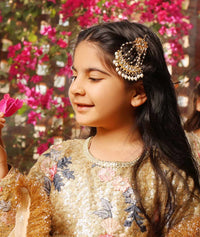
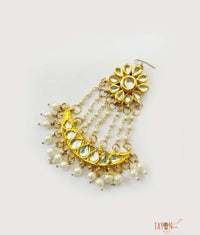
Select the accessories for the wedding lehenga look at the trial fitting stage, not on the day of the wedding. Place the juttis, the Parandi if one is being worn, the bangles, and any jewellery alongside the lehenga and assess the complete look as a unit.
For boys at the same wedding who need a coordinated look, the Safa Pagdi Collection at Fayon Kids offers options in colours that reference the girl's lehenga palette. Selecting the Safa Pagdi at the same time as the lehenga ensures that the coordination is intentional rather than improvised.
For sharara set options for other girls in the family attending the same wedding, the Girls Sharara Collection at Fayon Kids offers options in coordinating colours and fabrics.
Phase Four: The Celebration Day
Dressing for a Wedding: Practical Tips
Begin dressing the child at least thirty minutes before the family needs to leave for the wedding. Rushing the dressing process at an important occasion creates stress that the wedding does not need and frequently results in imperfectly assembled looks that show in photographs.
Have all accessories laid out and ready before beginning to dress the child. Check that juttis are comfortable, that the dupatta is correctly draped and secured, and that any hair accessories, including the Parandi, are correctly placed before leaving home.
Carry a small emergency kit to the wedding: a safety pin or two for unexpected dupatta issues, a small stain-removal pen for the inevitable sweet or food mark, and a hair clip in case any hair styling needs adjustment during the event.
Photography at the Wedding
The kids' wedding lehenga has been chosen, sized, prepared, and assembled into a complete look. It will now be photographed extensively. To ensure the most beautiful possible photographs, encourage the child to stand naturally rather than stiffly, to hold the dupatta in a way that shows both the lehenga and the dupatta, and to move naturally rather than posing rigidly when informal photographs are being taken.
The most beautiful wedding photographs of children in lehengas are almost always the informal ones taken when the child is genuinely engaged in the celebration rather than posed for the camera.
For the complete range of kids wedding lehenga options across all age groups, styles, and wedding functions, and for the full range of complementary ethnic wear including gown options at the Princess Collection and the full family ethnic wardrobe at Fayon Kids, explore everything Fayon Kids has made available for the most important celebrations of childhood.
FAQs: Kids Wedding Lehenga Online
Q1. How do I know which wedding function a lehenga is appropriate for before buying online?
Check the embellishment weight and fabric formality against the function. Heavy silk with zari embroidery is appropriate for the ceremony; lighter georgette with bright colour is better for the mehendi. Read the product description carefully for occasion guidance.
Q2. What is the most important measurement for buying a kids wedding lehenga online?
The chest circumference for the choli is the most critical measurement. A choli that fits correctly through the chest and shoulders makes the entire lehenga look properly proportioned regardless of minor adjustments needed elsewhere.
Q3. How early should I buy a kids wedding lehenga online?
At least four to six weeks before the wedding. This allows time for delivery, a relaxed trial fitting, any necessary alterations, and an exchange if required, all without time pressure.
Q4. What should I do if the lehenga arrives and the size is not quite right?
Contact the brand's customer service immediately and understand the exchange process. Take the lehenga to a tailor for minor adjustments if the issue is small enough to be corrected through alteration rather than exchange.
Q5. How do I assess embellishment quality from product photographs alone?
Look for even, consistent embellishment placement across the visible surface, embellishment that appears integrated with the fabric rather than floating on top of it, and close-up photographs that show the embellishment in detail.
Q6. Can a kids wedding lehenga bought online be worn for occasions other than the wedding?
Yes. A quality wedding lehenga in rich fabric can be reworn at family celebrations, festival occasions, and other formal events throughout the season, making it a strong wardrobe investment beyond the single occasion.